


Classify application and responsibility
Systems, data and the roles involved form the basis.
Suggestions appear from three characters.
No match. Try another term or choose a topic below.
Validate the controller against a model
The topic area at a glance
Customers we work for
Joint projects and their results
Working at IQstruct Engineering
ISO 9001 and TISAX
Alliances, associations, marketplaces
Quality policy and certificate
 Ai
AiClassify requirements technically and organisationally before individual tools turn into operational processes.
Unclear rules for the use of AI leave employees alone with questions about data, approvals and responsibility. At the same time, requirements have to suit the actual application and the role of the company.
IQstruct Engineering supports the technical and organisational classification of AI applications. Training conveys capabilities, limits and the handling of sensitive information. Usage rules, human review and reporting channels are connected with the existing information security management.
In a free first conversation we review your use of AI, the rules in place and open responsibilities. We clarify which technical and organisational steps follow from them.
Systems, data and the roles involved form the basis.
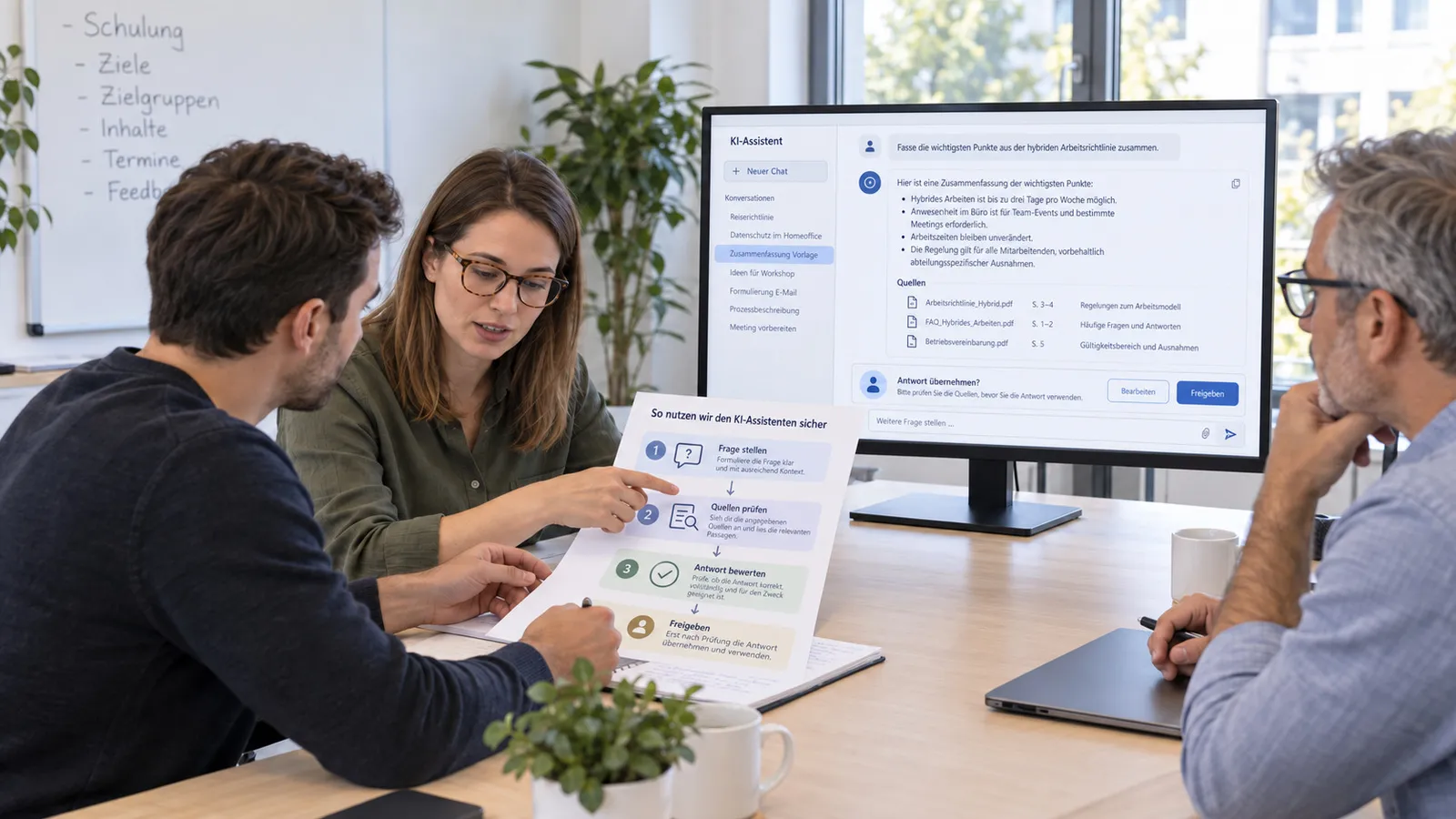
Documented training covers the review of results, data access and safe handling.
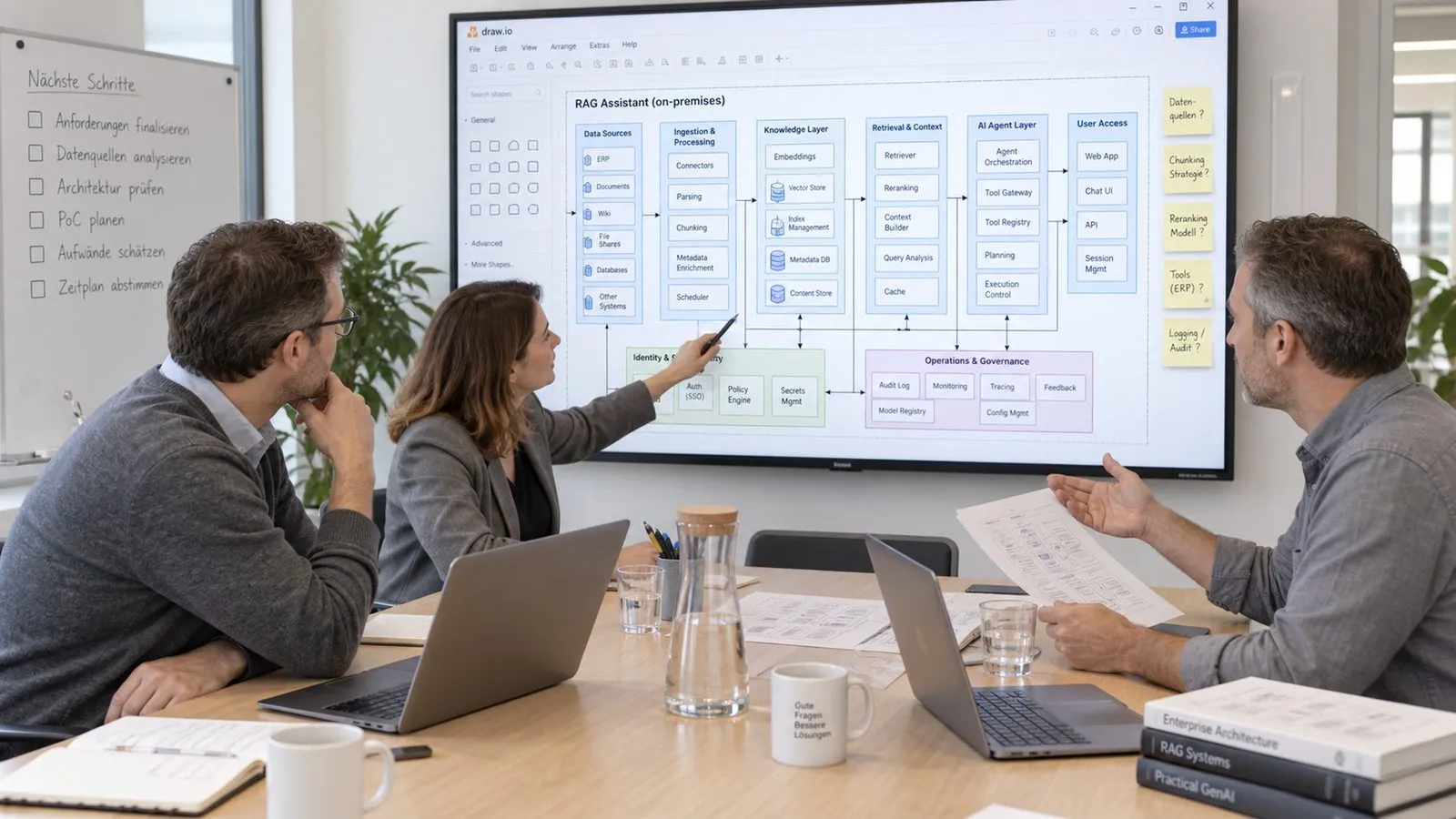
Access levels and approvals connect governance with technical implementation.
IQstruct Engineering supports the technical and organisational classification of AI applications.
Documented training and awareness measures are based on role, prior knowledge, the systems in use and the risk profile. They cover the possibilities and limits of AI, the critical review of results, the protection of confidential and personal data and permitted tools.
Prompt injection and conspicuous data access are classified as risks. Usage rules, human review and reporting channels connect to the existing information security management; recurring training accompanies ongoing IT and AI projects.

 Ai
AiAI governance
Requirements are classified against the actual application and the role of the company before individual tools turn into operational processes.
Ai1
Classify requirements
Relevant requirements are analysed against the operational use of AI.
 Ai
Ai2
Plan measures
Responsibilities, tasks and dates are set out in an overview of measures.
 Ai
Ai3
Carry out measures
The team implements the agreed organisational and technical measures.
 Ai
Ai4
Document evidence
Implementation and results are documented in a traceable way.
What AI can do and where its technical and practical limits lie.
Handling hallucinations as well as checking sources and facts.
Protection of confidential data, prompt injection and social engineering.
In the automotive industry, TISAX creates a common basis for handling confidential information.
Manufacturers and suppliers exchange design data, software and further sensitive project information. TISAX makes it possible to assess information security against common criteria and to share the results with business partners. As an engineering service provider in this supply chain, IQstruct Engineering likewise commits to protecting the information entrusted to it and holds a TISAX label. Clear access rights, governed data exchange and traceable responsibilities are therefore part of the cooperation in a project as well.

Funding
Funding programmes may be available for consulting on and trialling your AI project.
IQstruct Engineering supports the survey, the project outline and the preparation of the application documents. Your company submits the application. Whether and to what extent funding is possible depends on the programme, the location and the project.
We are glad to answer your detailed questions in a personal conversation.
IQstruct Engineering does not provide legal advice. We classify requirements technically and organisationally; binding legal assessments are made by external experts.
Through documented training whose content is adapted to role, prior knowledge and the systems in use.
Usage rules, reporting channels and emergency procedures are connected to the existing information security management.
Every industry has its particularities. That calls for a reliable partner who knows the requirements and delivers suitable solutions.
First conversation
Describe your task. We agree a date and discuss the possible project scope.
 Ai
Ai1
You request an appointment
 Ai
Ai2
We discuss your requirements
 Ai
Ai3
You receive a quotation for the agreed scope

Describe your task in the contact form. We come back with a proposed date.
Arrange a first conversationBooking calendar
The booking calendar appears here. It loads only after your consent, because your browser connects to Microsoft in the process.
Discover further suitable services.
Organise responsibilities, risks and evidence in an operable information security management system.
Combine introduction, human approvals and ongoing service.
Connect applications with central identities, roles and multi-factor authentication.
