


Operation and operating modes
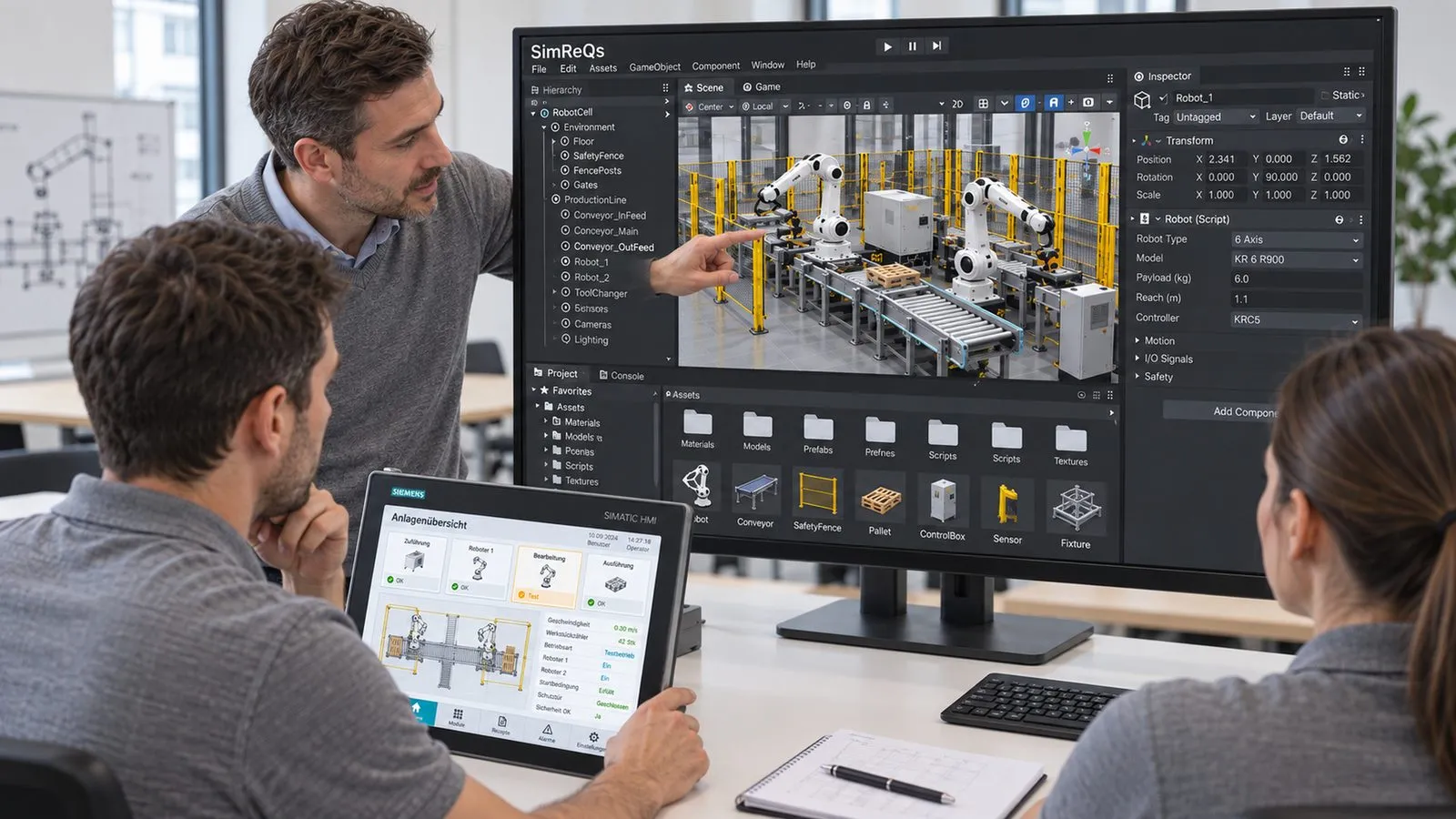
Plant screens, manual functions and the automatic sequence are taught on the virtual plant.
Suggestions appear from three characters.
No match. Try another term or choose a topic below.
Validate the controller against a model
The topic area at a glance
Customers we work for
Joint projects and their results
Working at IQstruct Engineering
ISO 9001 and TISAX
Alliances, associations, marketplaces
Quality policy and certificate

Use the virtual commissioning model for operation, troubleshooting and restart.
New plants and changed sequences require practice. Yet the real machine is often only available shortly before the start of production, when training and ramp-up already compete for the same plant time.
The simulation model from virtual commissioning brings training forward. Operators, maintenance staff and commissioning engineers get to know operator screens, operating modes and fault patterns while the plant is still being assembled, and arrive at the real machine with practical experience.
In a free first conversation we clarify which model exists, how many people are to be trained and which fault cases are to be practised.
The depth of the training depends on the role, the plant and the scope of the model.
Plant screens, manual functions and the automatic sequence are taught on the virtual plant.
Staff start the plant and bring it back into operation after an interruption.
Agreed fault patterns are triggered, recognised and cleared without intervening in production.
Changeovers are practised insofar as they are relevant for the plant.
A simulation model from virtual commissioning stays in operation as a training environment after the software test.
Operators, operating staff and maintenance staff learn plant functions and sequences while the real plant is still being assembled or is not available for training. On the model, faults can be triggered and restarts practised without intervening in running production.
On site, instruction on the actual system and its real characteristics follows. Training is thus spread over the time before and after the plant is assembled.
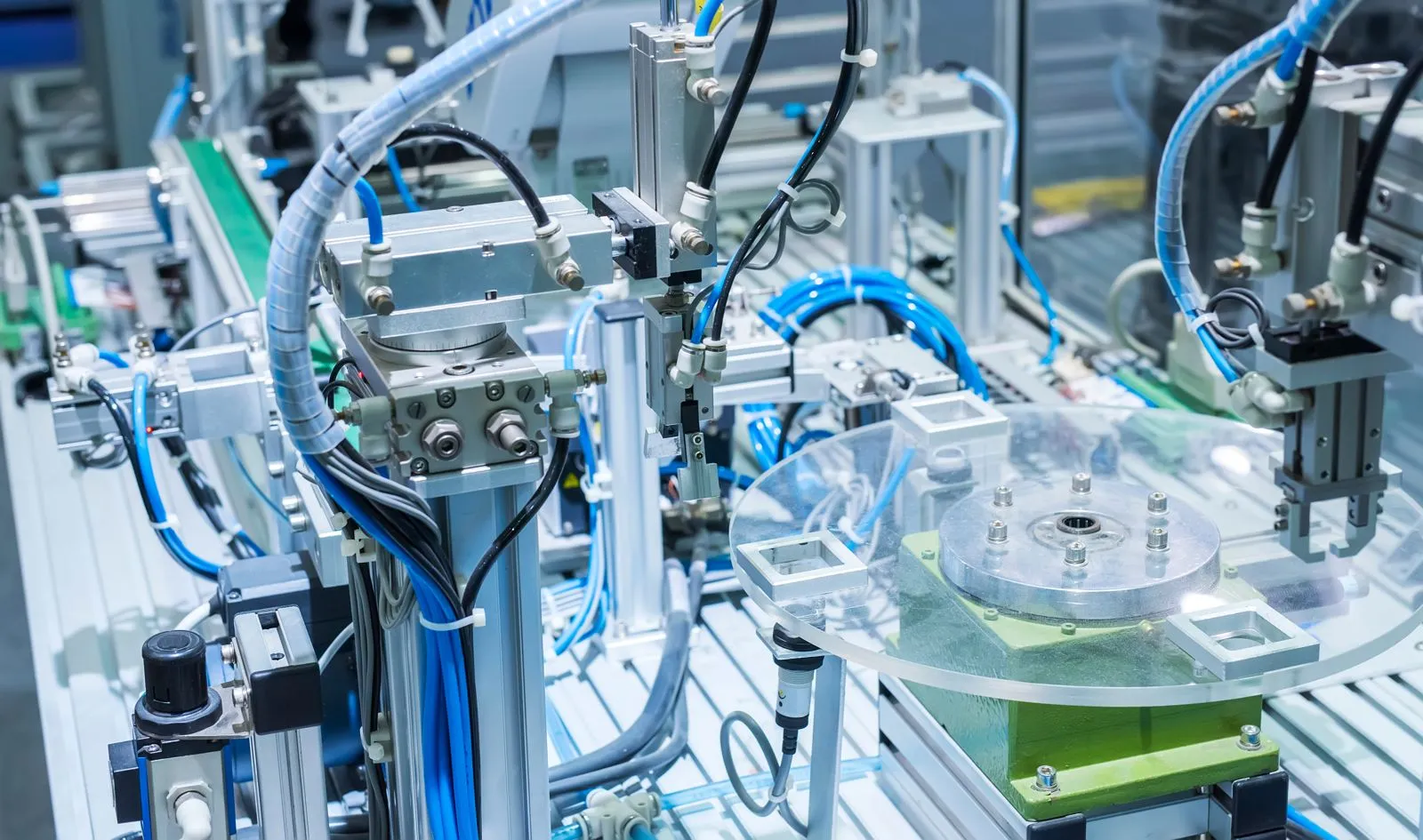
Before the start of production
Operating sequences, faults and restarts practised on the model prepare staff for the real machine.
 Ai
AiFrom a virtual commissioning project
Battery module production line of an automotive end customer
120
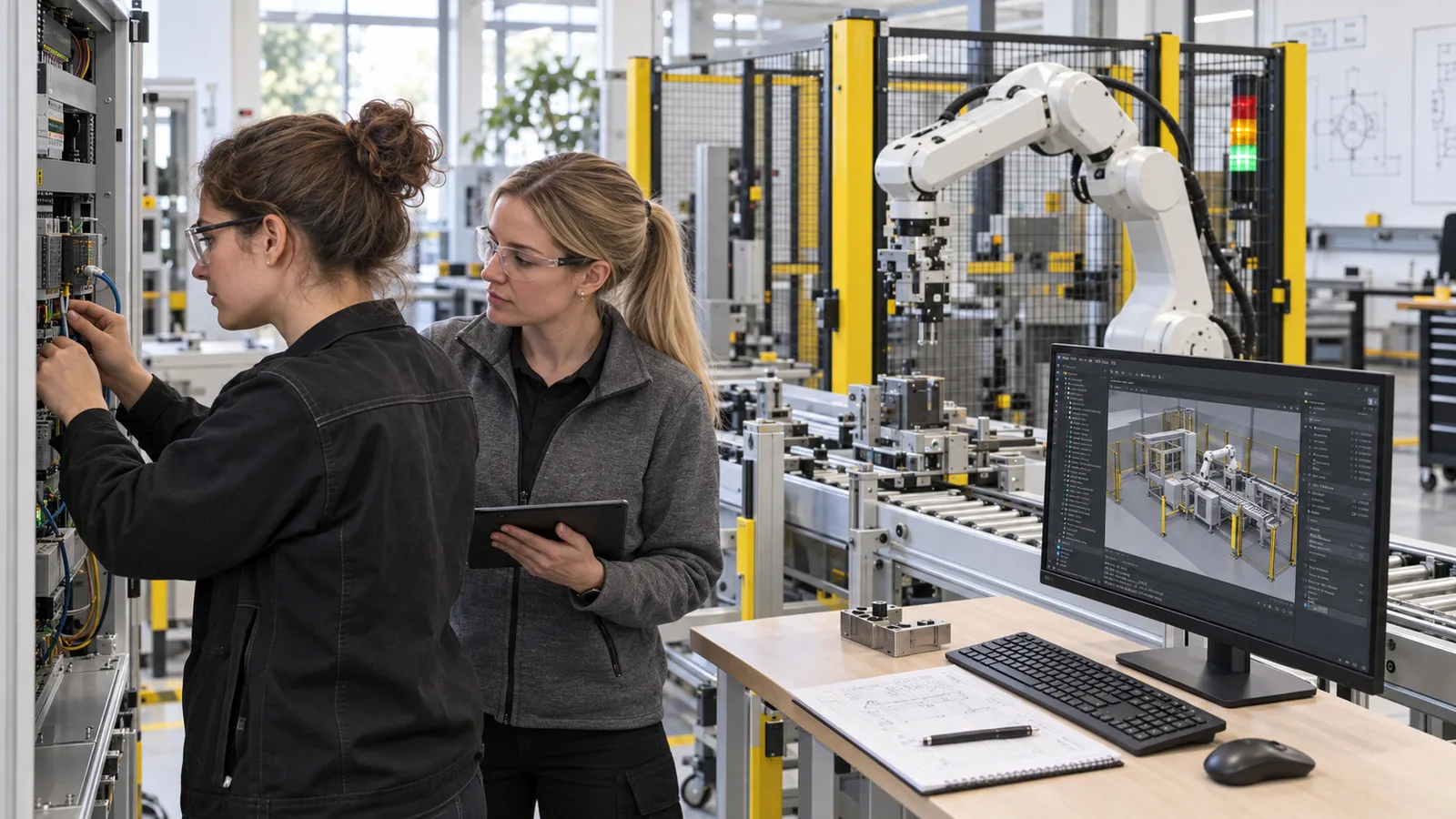
The training ran across several shifts, groups of people and plant clusters. Staff got to know operation and sequences before the real plants were available for training.
 Ai
Ai1
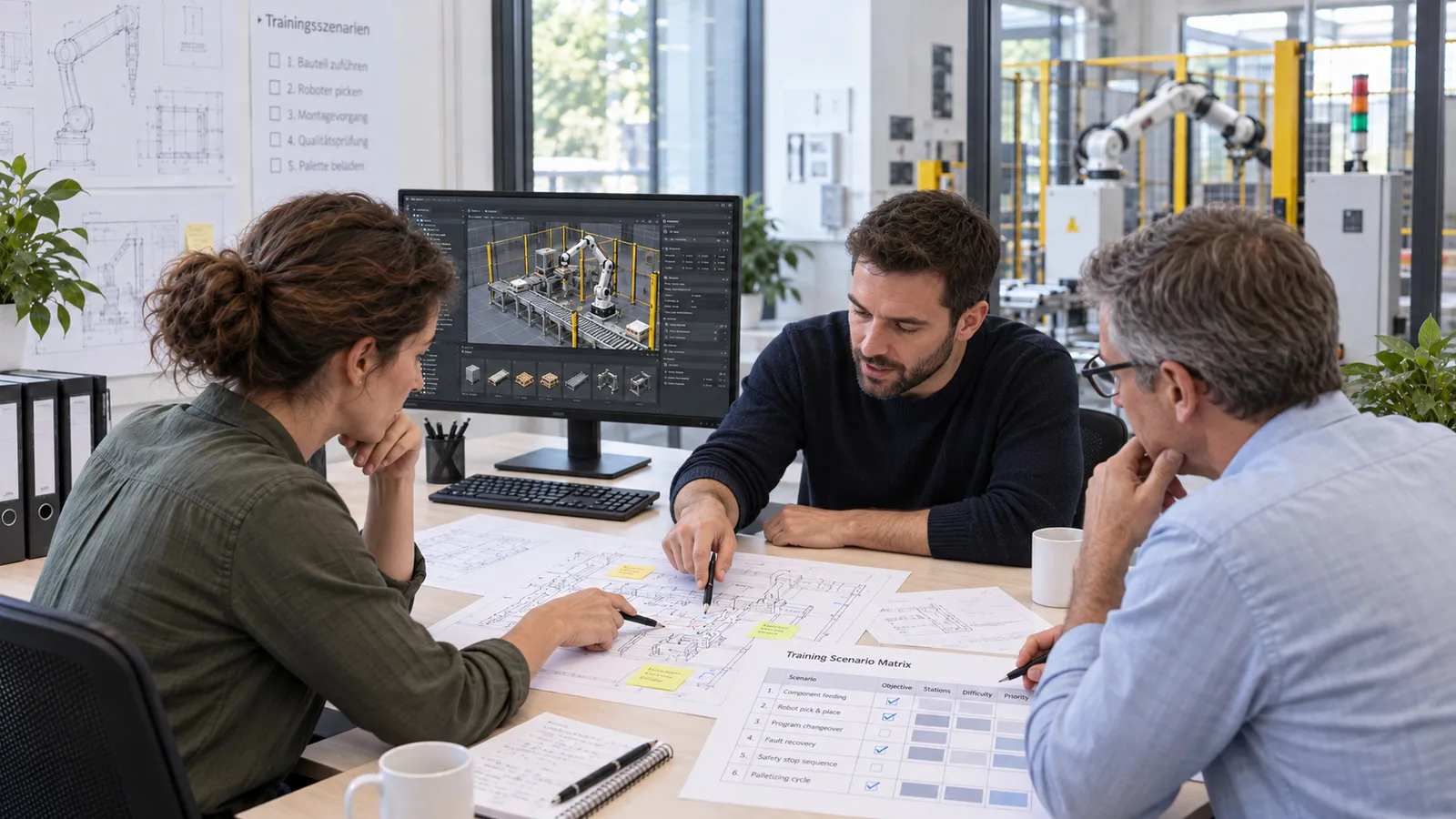
Define training cases
Trainers and operators choose the tasks on the basis of the specific plant.
 Ai
Ai2
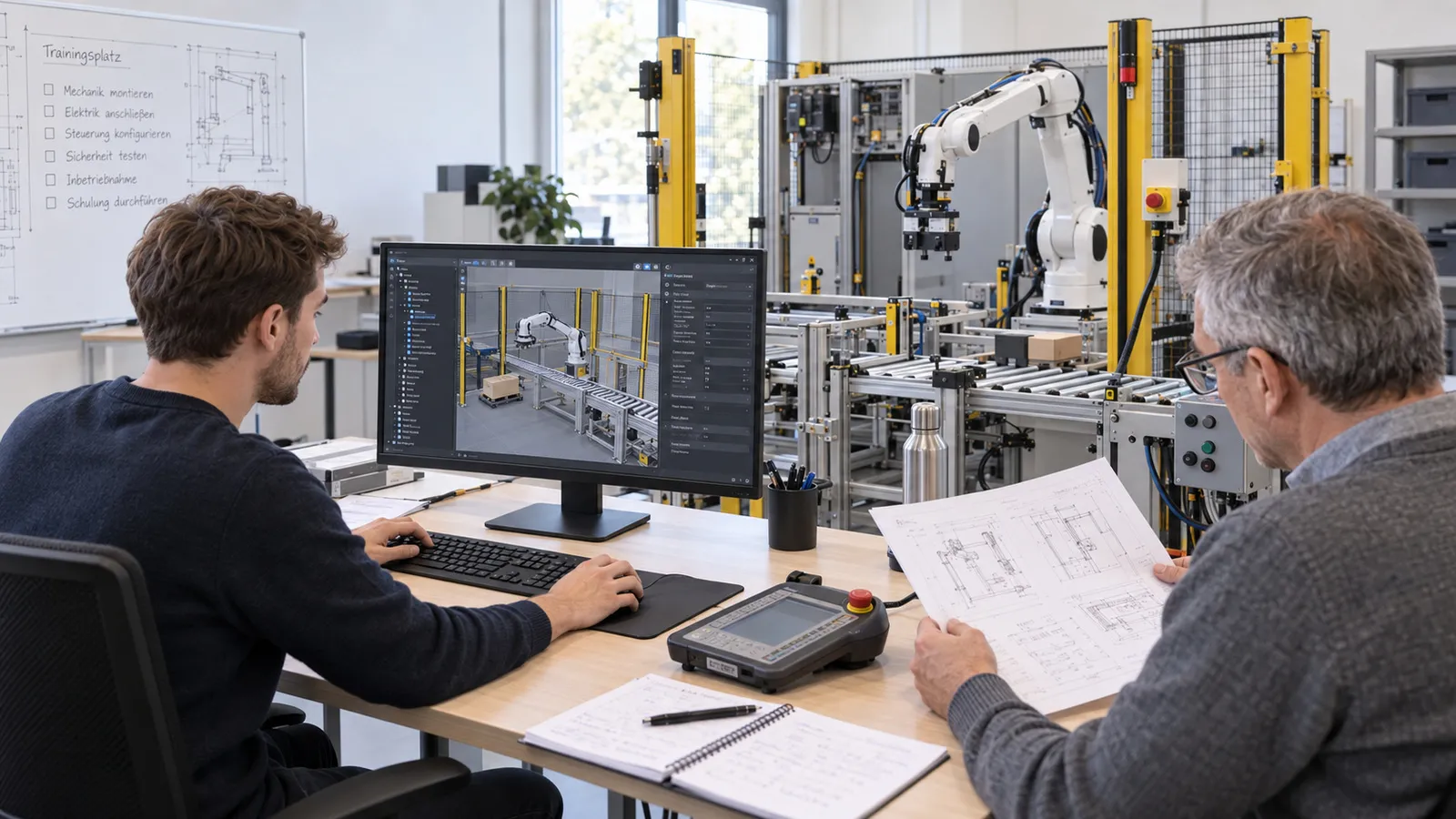
Prepare the training station
The training model and connected operating devices are set up.
 Ai
Ai3
Training and reuse
The model then serves for training, variants, conversions and retests of changed software.
Ai4
Apply it on the machine
Trained staff operate the real plant and clear faults.
For engineers
Automation engineers, commissioning engineers and those responsible for simulation learn to use the handed-over model themselves.
This includes loading the right model version, connecting to the PLC and robot, starting and resetting scenarios and diagnosing connection faults. For later training, the model version has to match the plant; its maintenance is agreed with the customer.
We are glad to answer your detailed questions in a personal conversation.
Content and dates depend on your plant and the tasks of the participants. Programming courses can complement training on the model.
Operator, operating and maintenance staff, commissioning engineers, PLC and robot programmers as well as new and experienced employees who are getting to know a new plant.
The model from virtual commissioning is used. If none exists yet, we clarify which model scope the training requires.
Every industry has its particularities. That calls for a reliable partner who knows the requirements and delivers suitable solutions.
First conversation
Describe your task. We agree a date and discuss the possible project scope.
 Ai
Ai1
You request an appointment
 Ai
Ai2
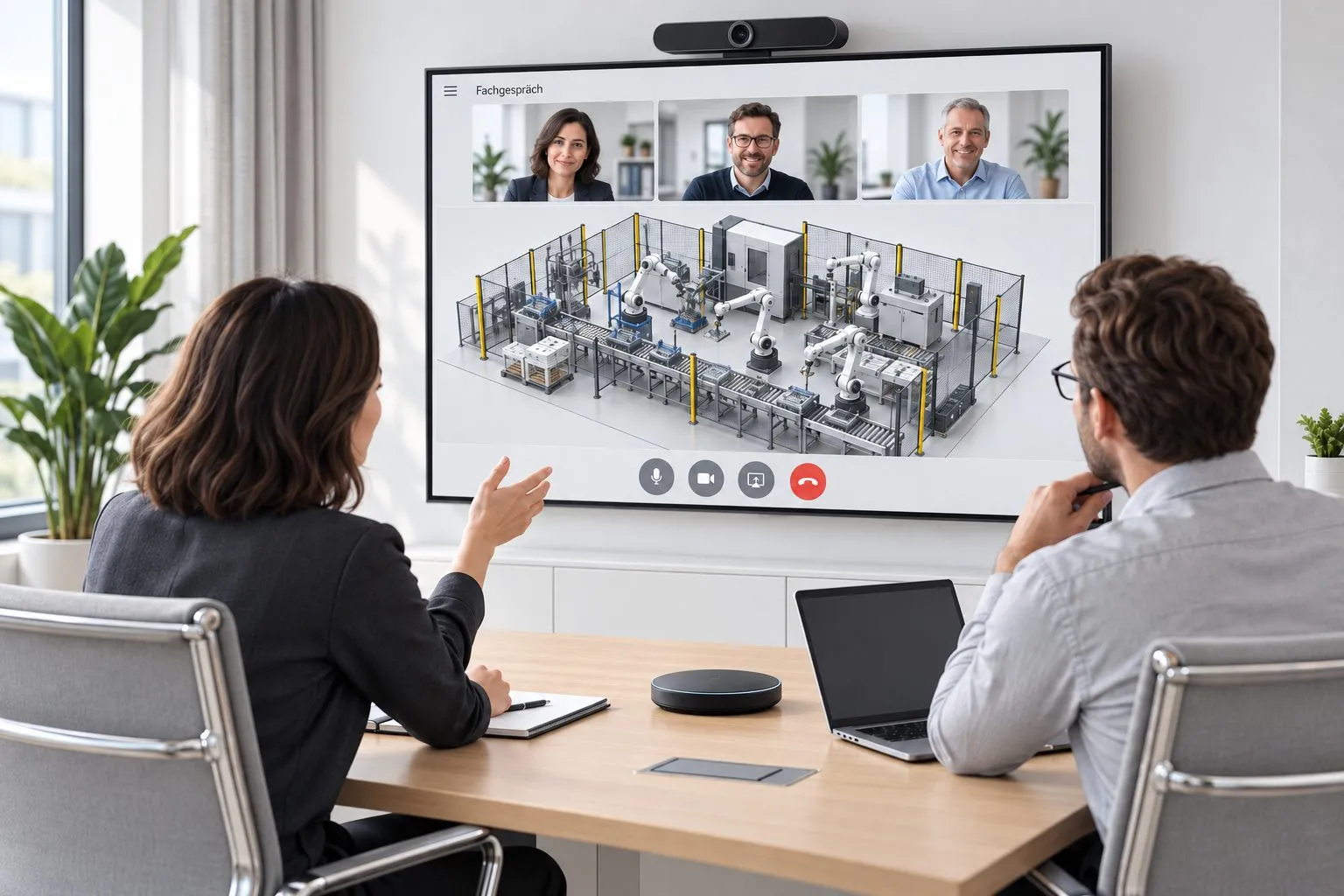
We discuss your requirements
 Ai
Ai3
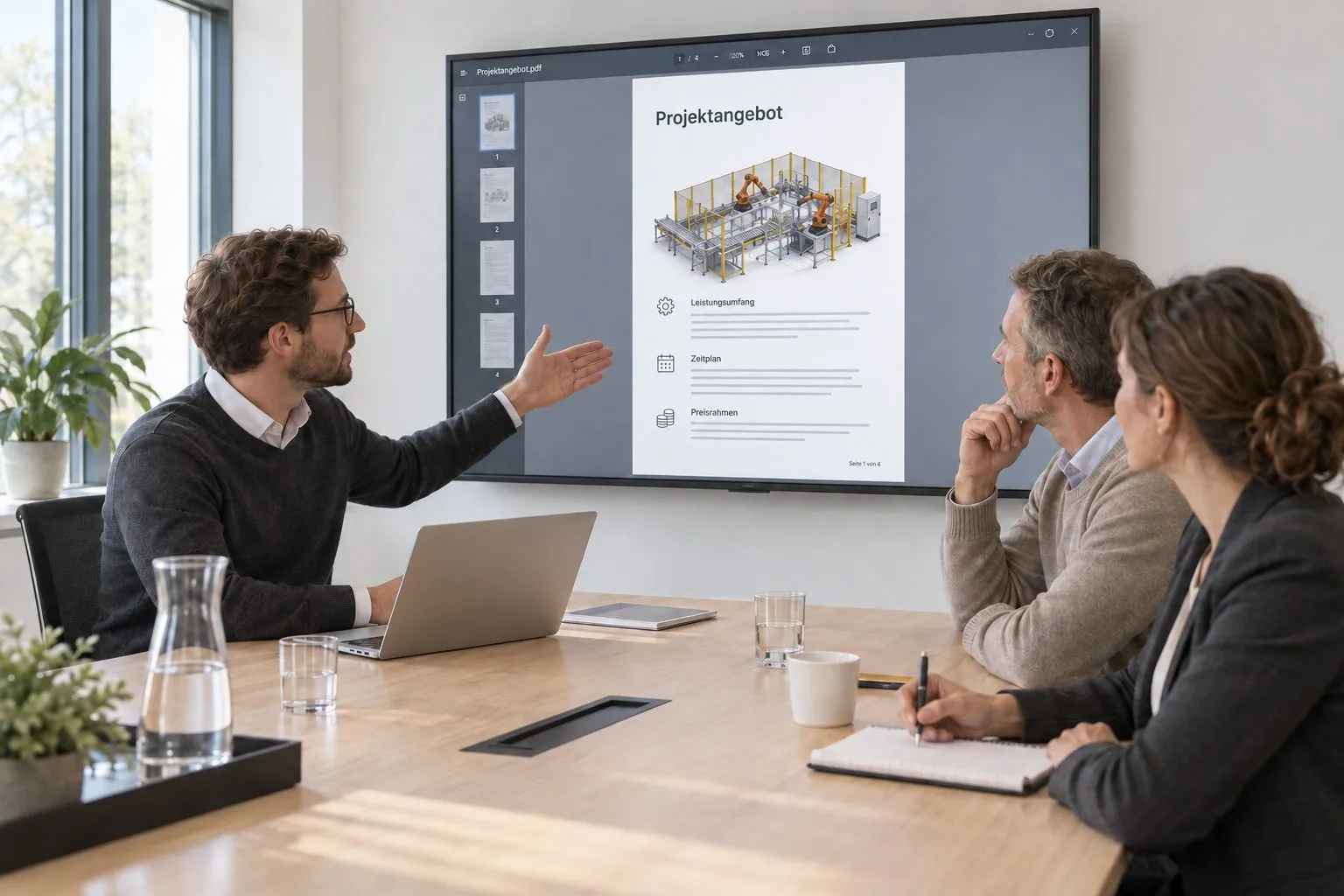
You receive a quotation for the agreed scope

Describe your task in the contact form. We come back with a proposed date.
Arrange a first conversationBooking calendar
The booking calendar appears here. It loads only after your consent, because your browser connects to Microsoft in the process.
Discover further suitable services.
Test PLC and robot programs on the digital plant model before real commissioning begins.
We bring software, peripherals and real sequences together, from the I/O check to the ramp-up.
Connect sequence control, operation and diagnostics in one coordinated automation concept.
