


Develop the software
Program control, operation and diagnostics for the plant sequence.
Suggestions appear from three characters.
No match. Try another term or choose a topic below.
Validate the controller against a model
The topic area at a glance
Customers we work for
Joint projects and their results
Working at IQstruct Engineering
ISO 9001 and TISAX
Alliances, associations, marketplaces
Quality policy and certificate
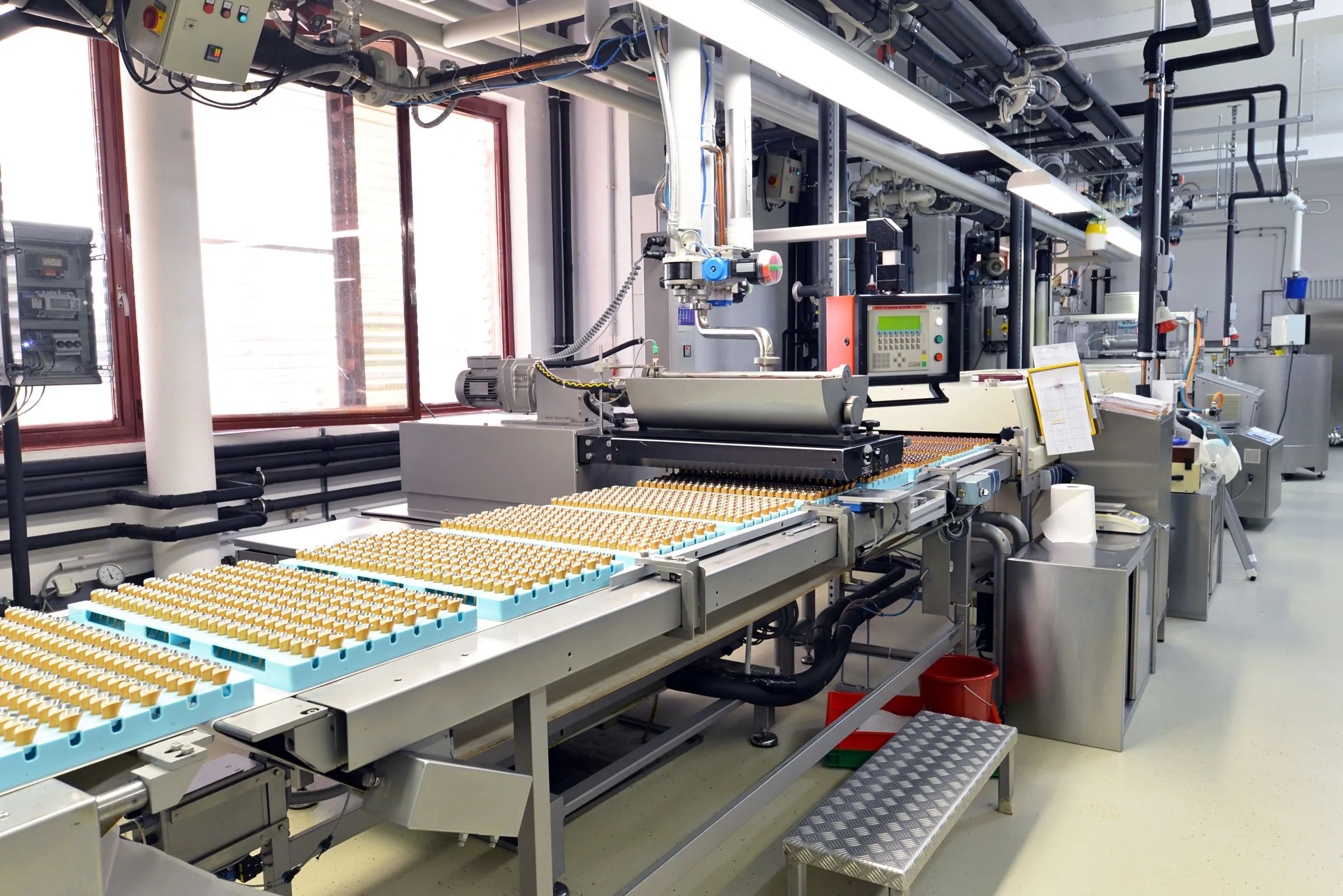
Connect sequence control, operation and diagnostics in one coordinated automation concept.
Unclear program structures make changes harder and prolong troubleshooting. When the control system and the operator interface are developed separately, staff often lack the information needed for quick diagnosis.
In a free first conversation we clarify which control platform is prescribed, which part of the software is written from scratch and what is carried over from the existing system.
Program control, operation and diagnostics for the plant sequence.
Take customer specifications and OEM blocks into account in the program.
Check the software for function on the model and on the real plant.
Siemens, Beckhoff and Schneider Electric make up the technology we use regularly.
For Siemens we work with the TIA Portal and STEP 7 Classic including Safety, from the S7-1200 and S7-1500 to existing plants with S7-300 and S7-400. For Beckhoff we use TwinCAT 2 and TwinCAT 3, for Schneider Electric the Modicon portfolio. CODESYS serves as a vendor-independent development environment in accordance with IEC 61131-3.
Via PROFINET, PROFIBUS, Modbus and CAN we connect distributed I/O, drives, sensors, safety technology and robotics. The coupling to MES and higher-level systems transfers orders, recipes, states and production data.

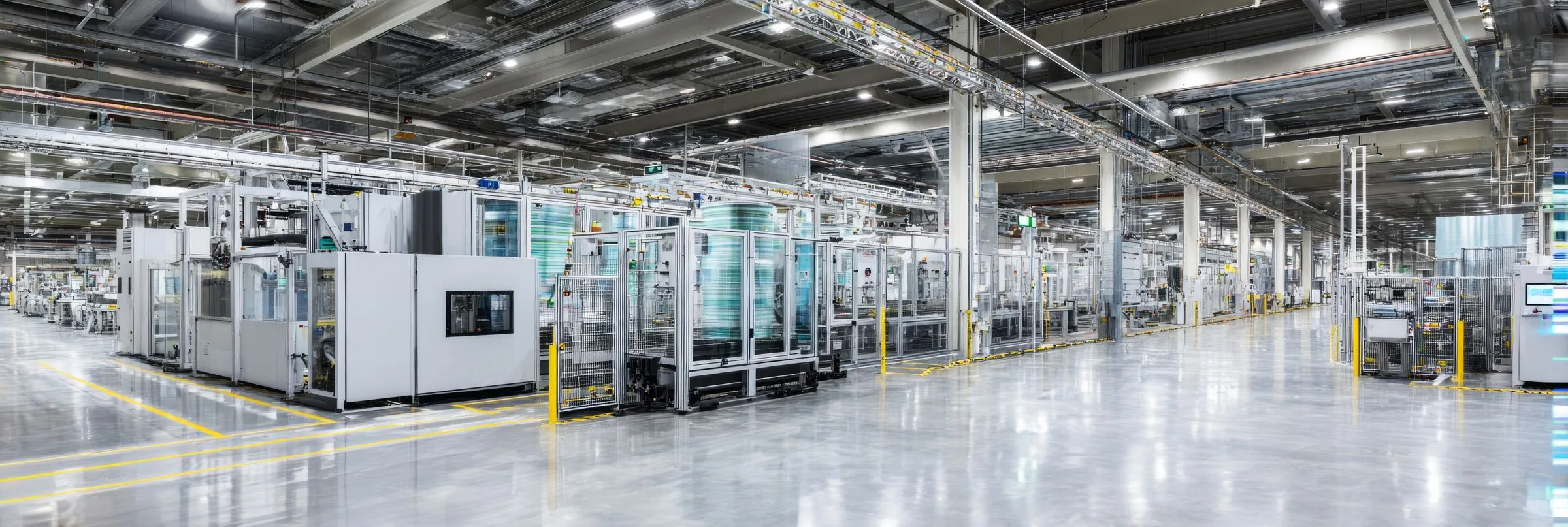
In operation
A clear base program, consistent messages and coordinated operator screens help staff find faults on the plant.
 Ai
Ai1
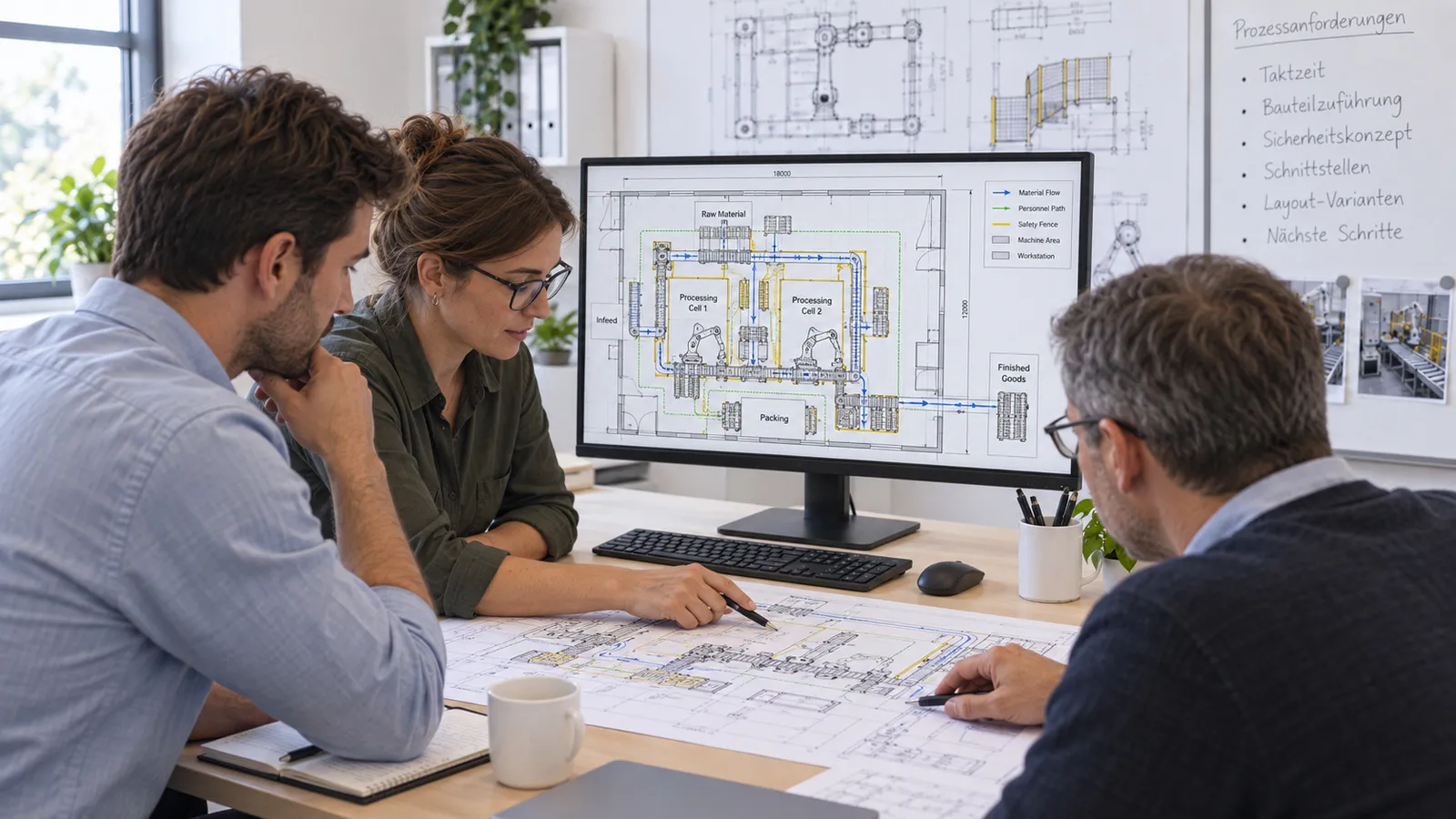
Discuss process requirements
Process description, plant layout and interfaces are clarified with your team.
 Ai
Ai2
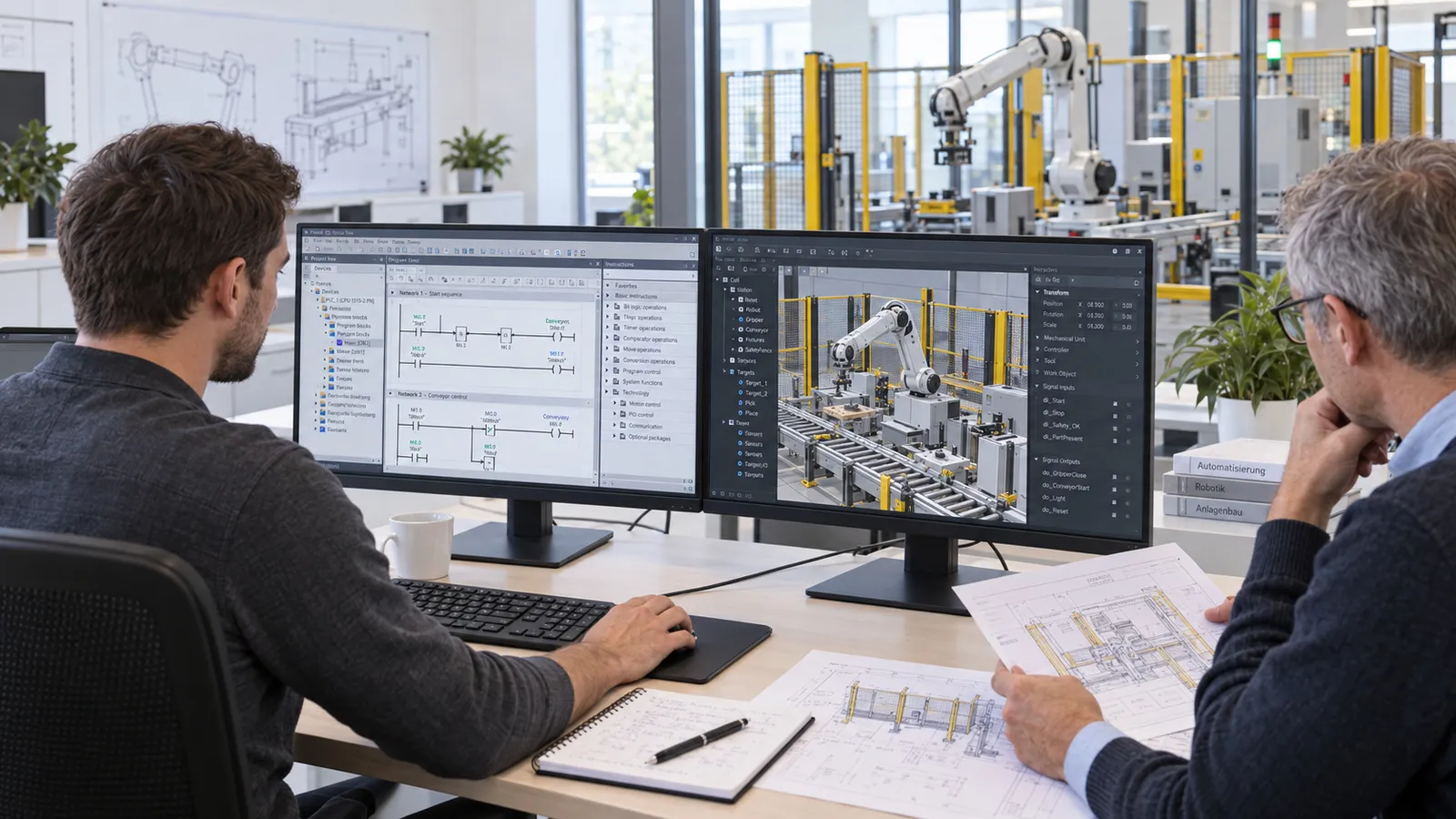
Program the controllers
PLC and robot programs are developed as one coordinated automation concept.
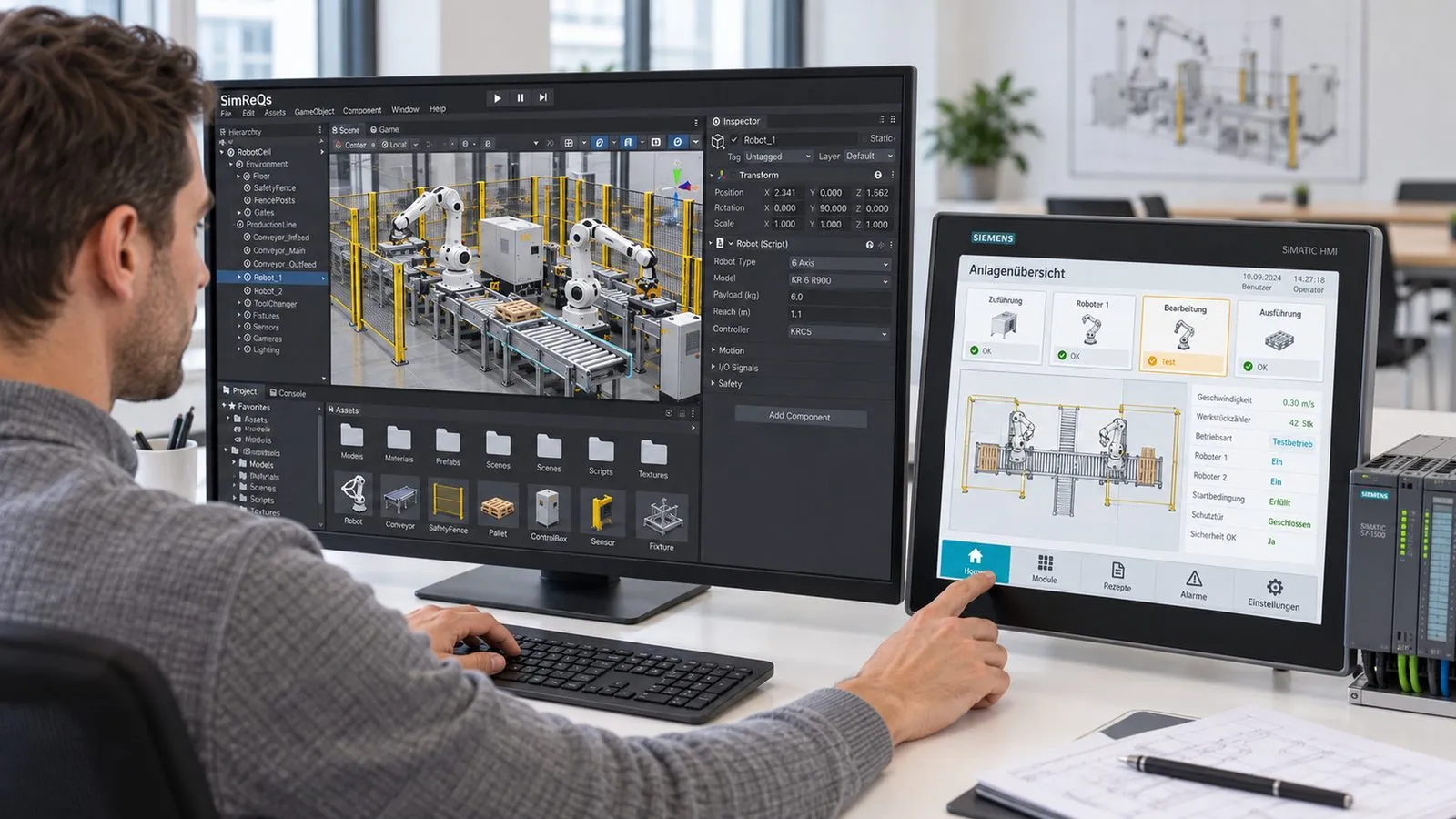 Ai
Ai3
Virtual commissioning
The real programs control the model through a bidirectional coupling; the phase ends with an accepted software version.
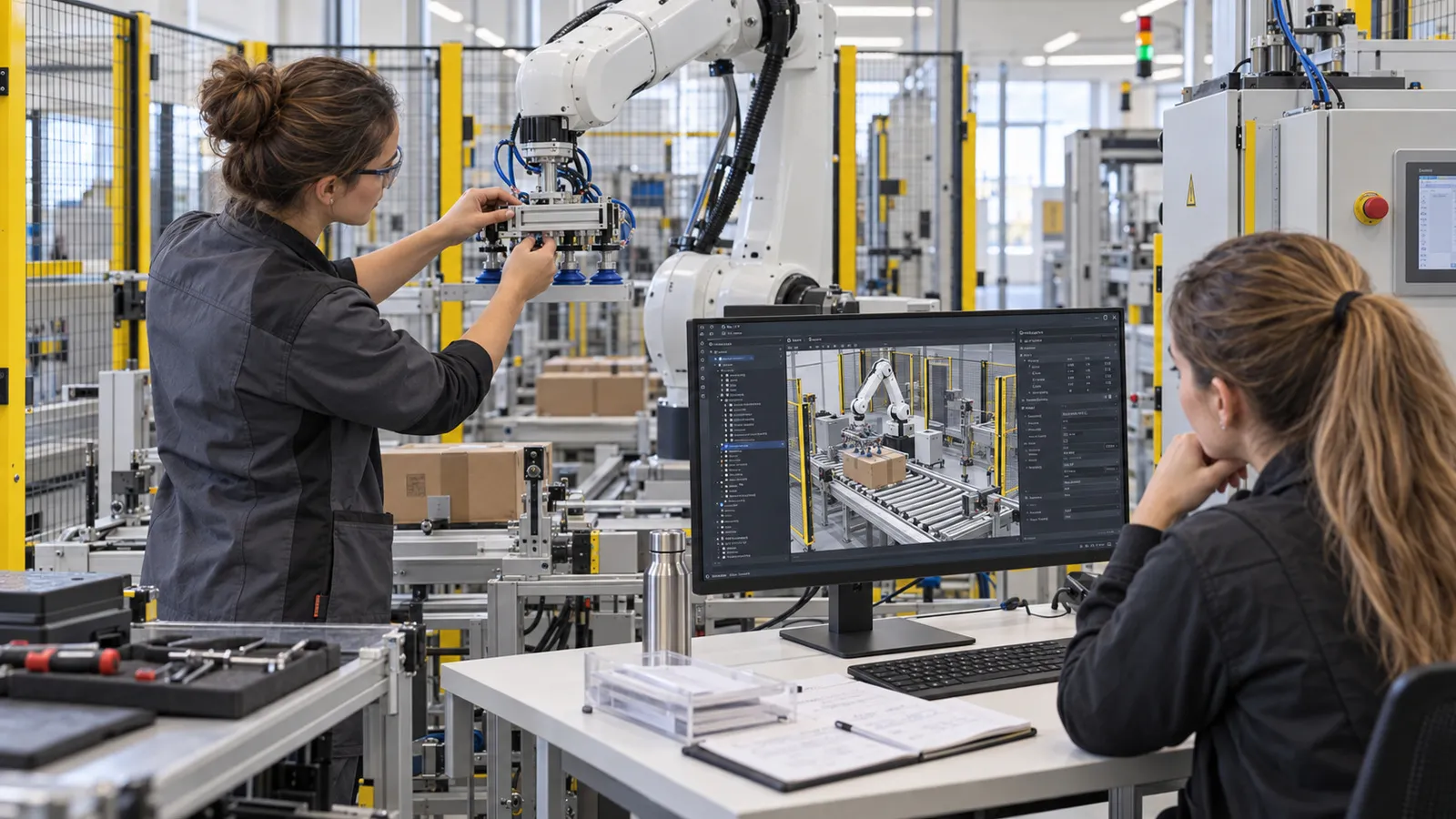 Ai
Ai4
Commission the real plant
The tested software version goes to the real plant and is fine-tuned there.
WinCC, WinCC Unified and Beckhoff HMI connect plant states with operation and diagnostics.
Manual functions, operating modes and plant states appear where staff need them.
Alarms and process trends over time show what is happening on the plant.
Recipes and rights management are tailored to the machine in question.
Industrial communication and the MES connection bring information into the operator's environment.
Team
Specified blocks and interfaces shape the work in plant projects.
Individual members of our team bring more than 20 years of experience in PLC programming and industrial automation. Siemens, Beckhoff and Schneider Electric as well as the OEM standards TMOv3, GSC, VASS and Integra form part of that technical background. For a new project, the applicable specifications and the existing program versions are agreed. Development can then build on the intended basis instead of having to align differing structures afterwards.
We are glad to answer your detailed questions in a personal conversation.
Yes. Besides current controller generations, we look after plants with older systems such as S7-300 and S7-400 and integrate them into new sequences.
The PLC side handles interfaces, handshakes, releases and states between the controller and the robot. The robot programs themselves are written in robot programming.
A complete risk assessment is not included as standard. We implement specified safety functions in the control software.
Every industry has its particularities. That calls for a reliable partner who knows the requirements and delivers suitable solutions.
First conversation
Describe your task. We agree a date and discuss the possible project scope.
 Ai
Ai1
You request an appointment
 Ai
Ai2
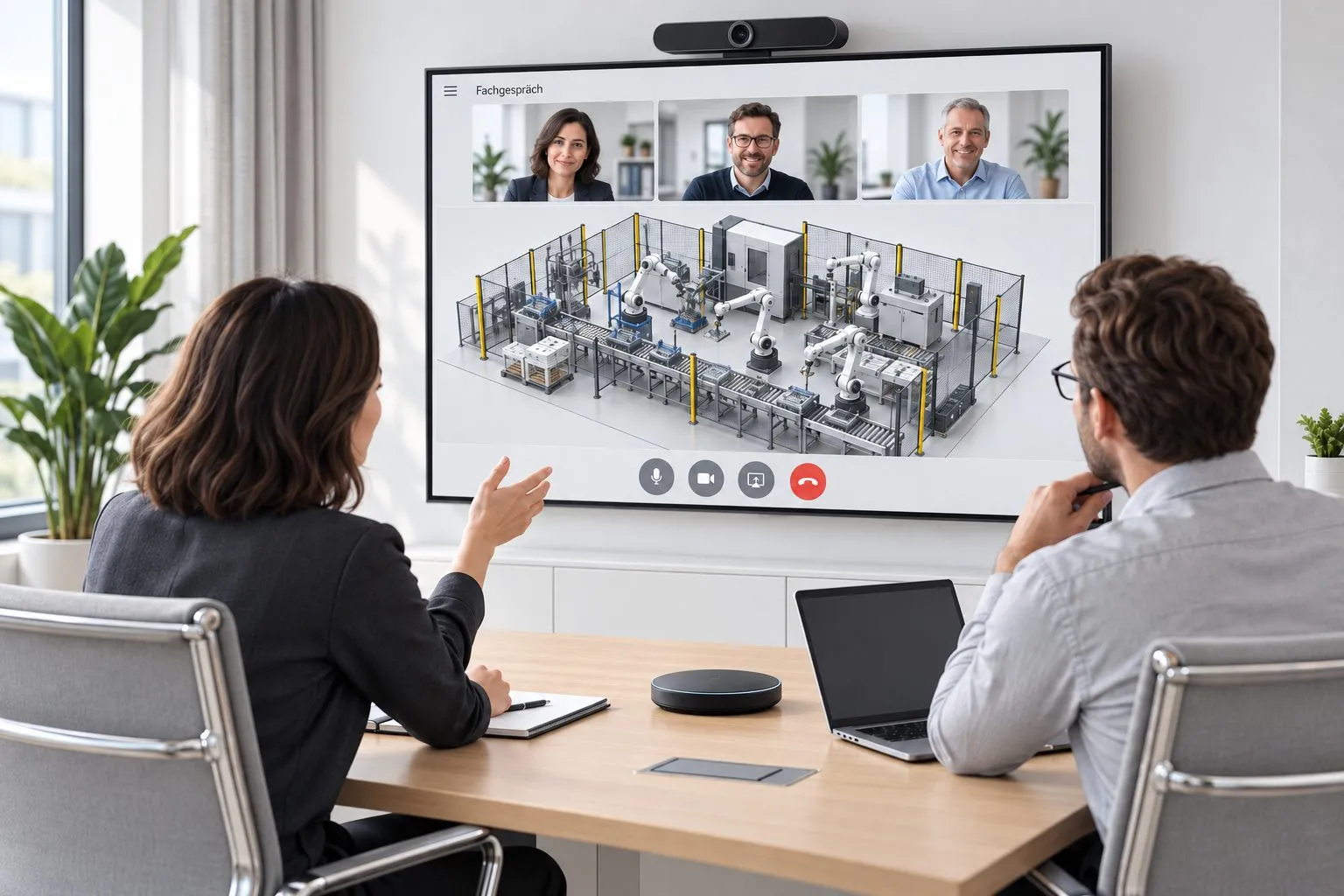
We discuss your requirements
 Ai
Ai3
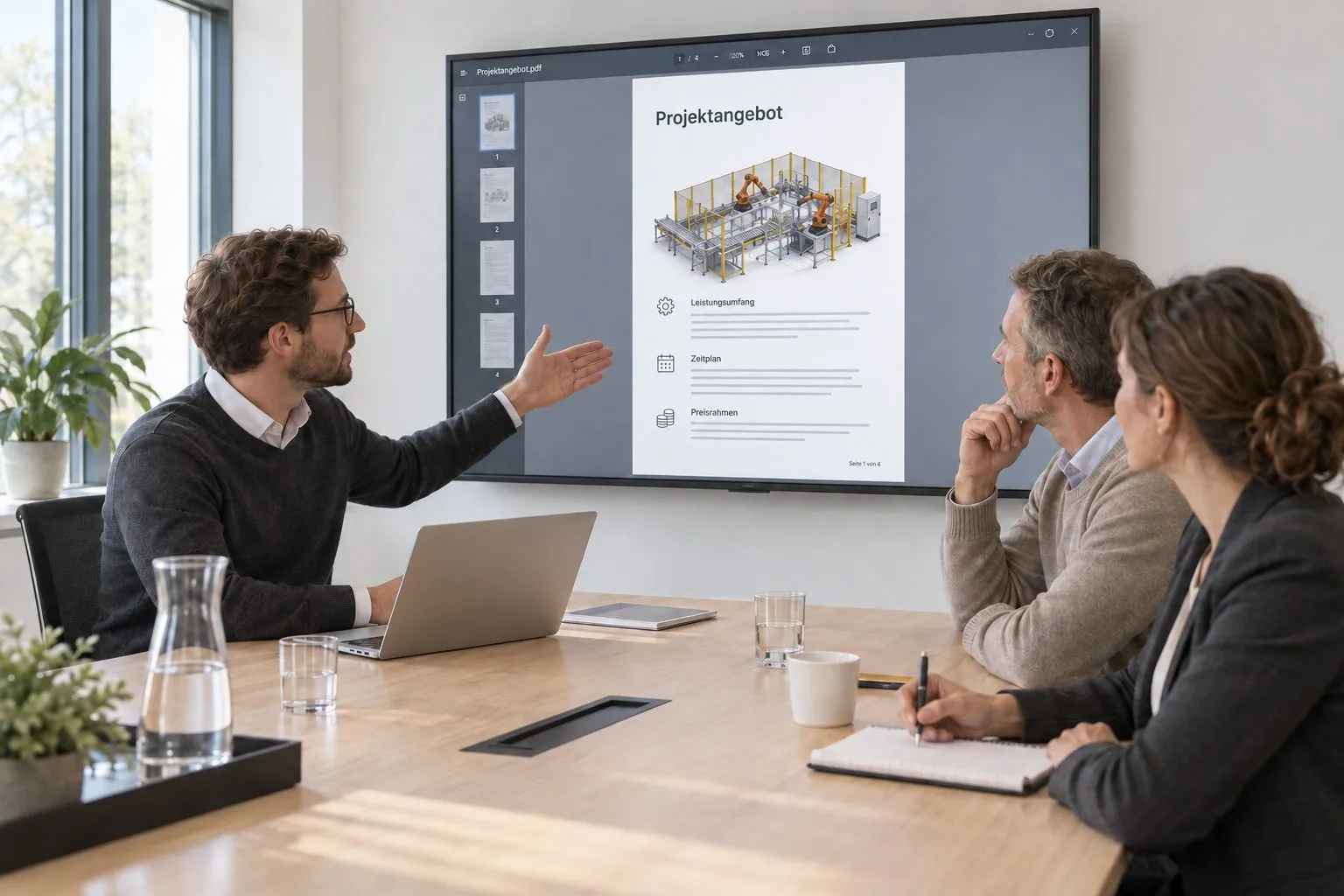
You receive a quotation for the agreed scope

Describe your task in the contact form. We come back with a proposed date.
Arrange a first conversationBooking calendar
The booking calendar appears here. It loads only after your consent, because your browser connects to Microsoft in the process.
Discover further suitable services.
Test PLC and robot programs on the digital plant model before real commissioning begins.
Implement specified protective functions in control software and test their response on the plant.
Bring software, peripherals and real sequences together, from the I/O check to the ramp-up.
Prepare movements and interfaces offline and fine-tune them on the real cell.
