


Cycle time and OEE
The simulation shows whether the system reaches the required cycle time and the expected overall equipment effectiveness.
Suggestions appear from three characters.
No match. Try another term or choose a topic below.
Validate the controller against a model
The topic area at a glance
Customers we work for
Joint projects and their results
Working at IQstruct Engineering
ISO 9001 and TISAX
Alliances, associations, marketplaces
Quality policy and certificate
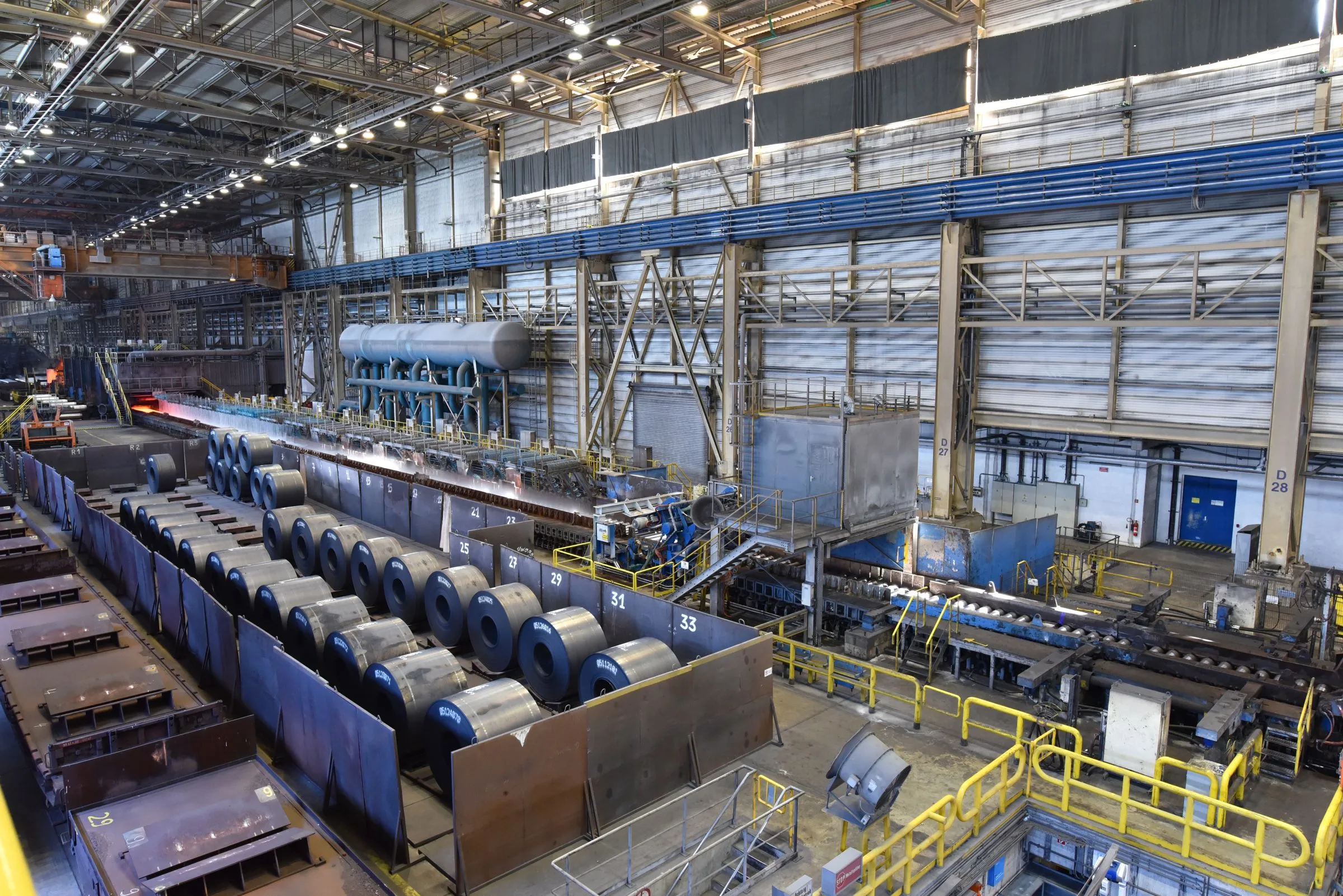
Material flow simulation examines how stations, buffers and transport routes work together over many cycles.
A single station reaches its target output while the overall system still waits. Varying processing times, faults and different order sequences change throughput and stock levels. Static calculations reproduce these interactions only to a limited degree. For a sound layout, realistic assumptions, scenarios and comparison figures have to be agreed so that the results can carry a planning decision.
In a free first conversation we clarify which question the simulation is meant to answer and which data has to be available for it.
The key figures are selected according to the system, the objective and the available data.
The simulation shows whether the system reaches the required cycle time and the expected overall equipment effectiveness.
Stations and resources are assessed in the context of the whole line.
Buffer levels and waiting times show where handovers slow the system down.
Faults become visible together with their later effect on the overall system.
Material flow simulation models a system on an event basis and looks at it over many consecutive cycles.
Typical systems are large warehouses, conveyor and belt systems, airport baggage handling systems, distribution centres and parcel logistics. In such systems, handovers, buffers and faults decide the performance of the whole.
Because the runs can be accelerated considerably, many cycles and long operating periods are examined in a short time. States and faults that only occur after many repetitions in normal operation thus become visible before implementation.
For this, IQstruct Engineering uses Experior, a platform for 3D models, simulation and virtual commissioning that now belongs to Schneider Electric. If the concept holds, virtual commissioning tests the real control software in the next step.
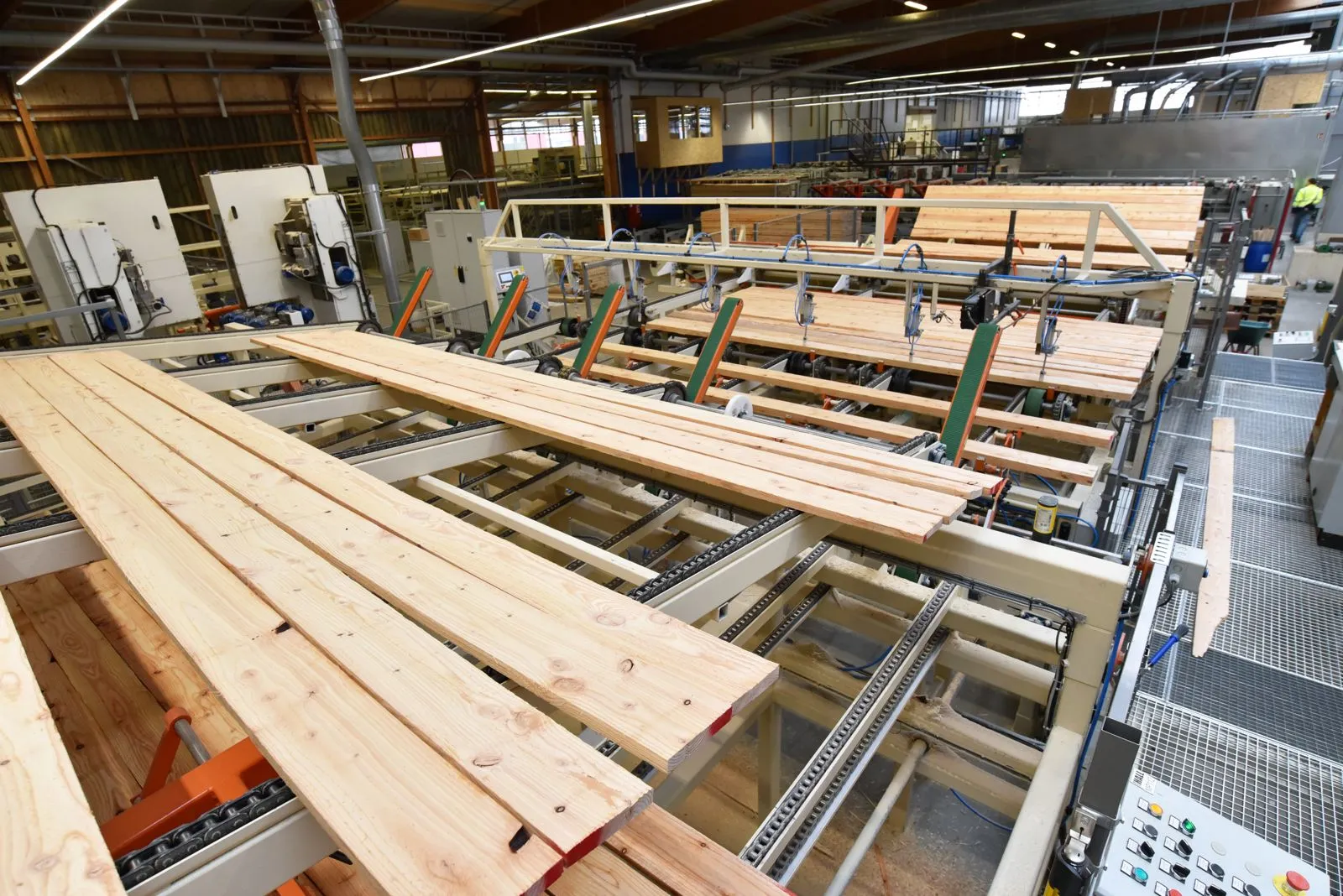
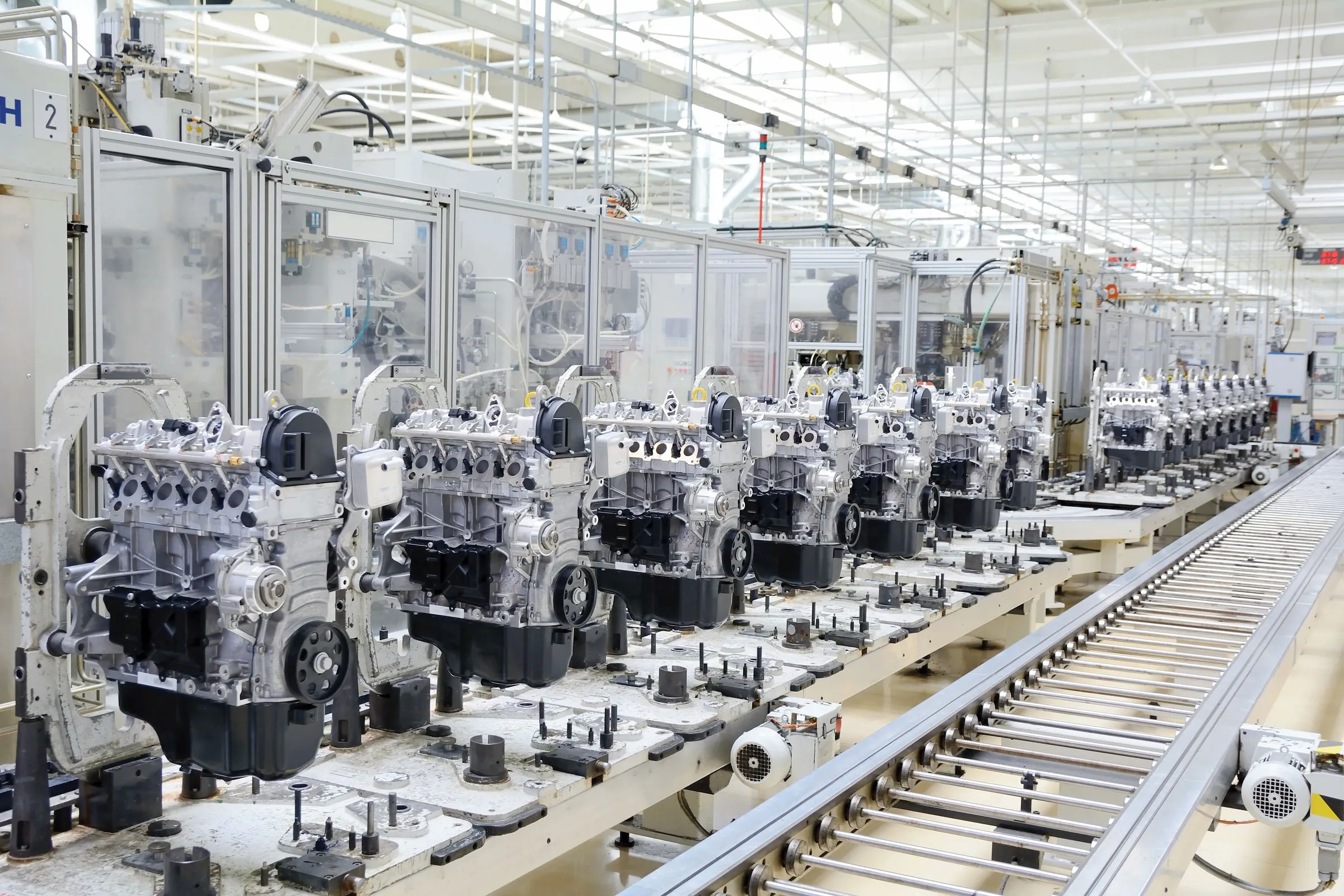
Before the investment
The simulation shows how handovers, buffers and faults determine the performance of the whole line.
 Ai
Ai1
Plan the material flow
Layout, conveyor lines, quantities and cycle times form the input data.
 Ai
Ai2
Build the conveyor model
The data are used to build an event-based model of the system in Experior.
 Ai
Ai3
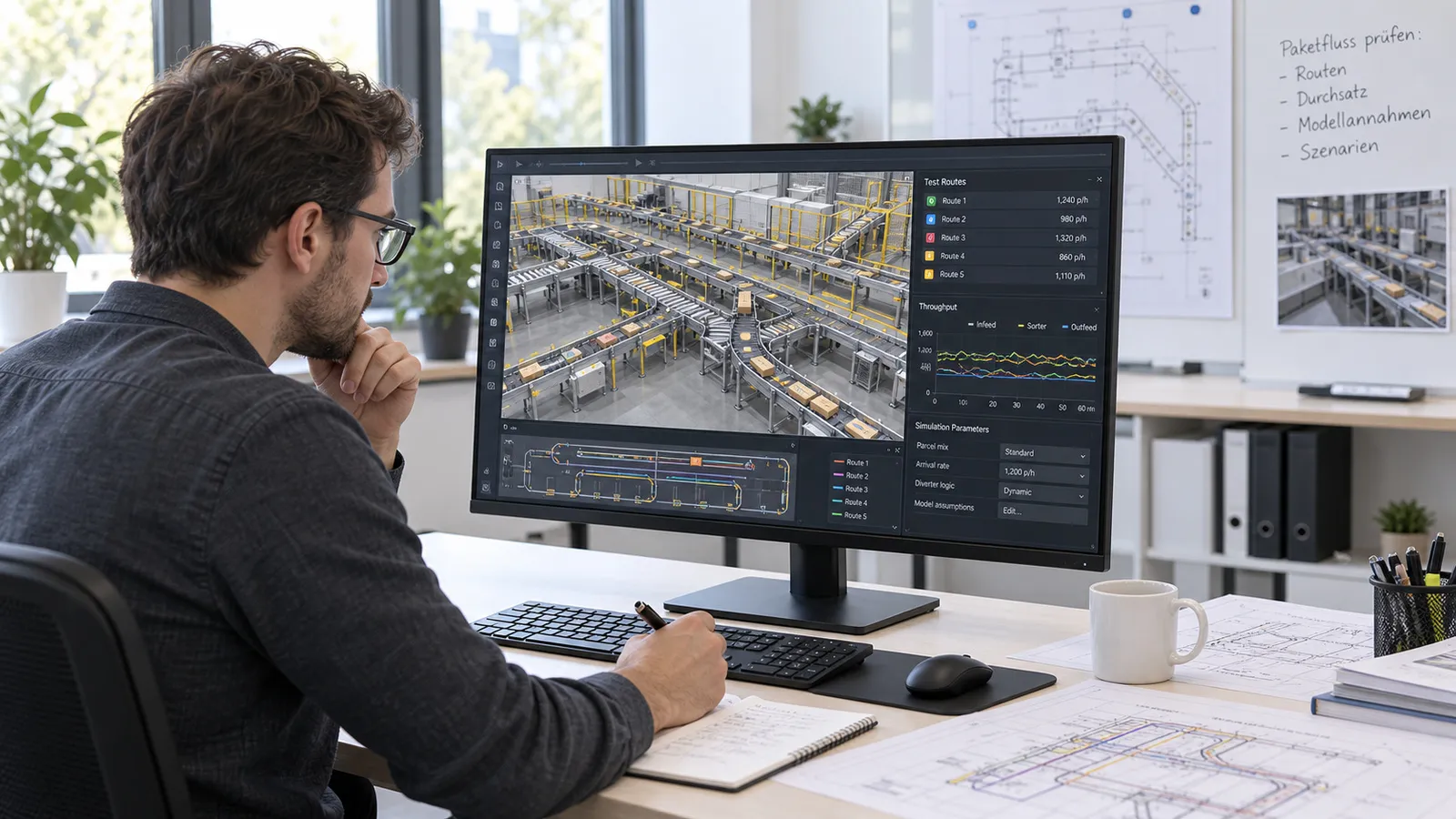
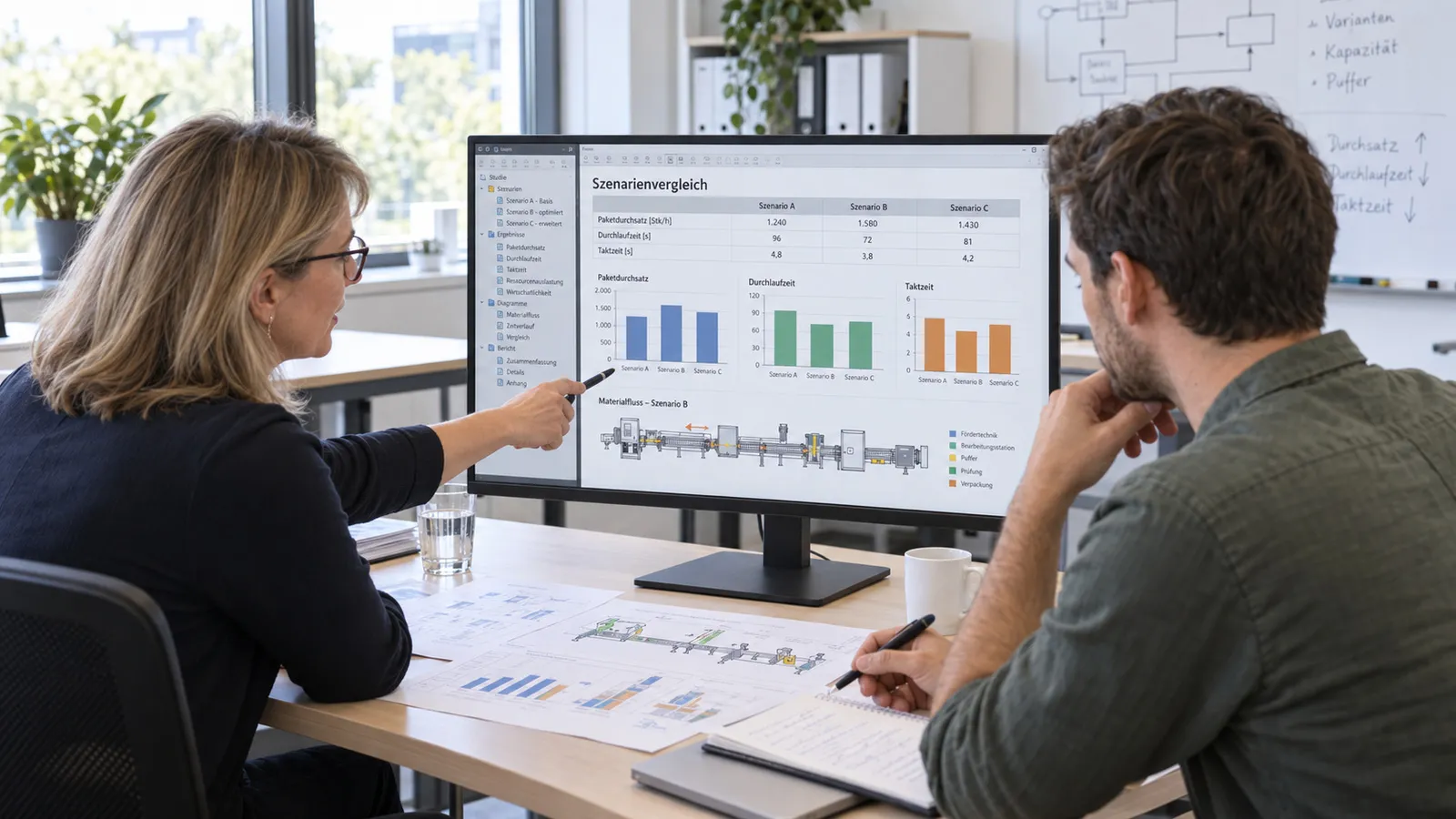
Check the parcel flow
Process experts check the routes and assumptions of the model in the running simulation.
 Ai
Ai4
Evaluate scenarios
Throughput, lead and cycle times of the agreed scenarios are set out in the results report.
Example scenario
A conveyor line connects several stations.
The model compares different buffer sizes and fault situations. Throughput, waiting times and utilisation are examined. The scenario describes a possible study and not a completed customer project.
We are glad to answer your detailed questions in a personal conversation.
Simulation results apply to the underlying data and assumptions. Process experts check whether the model reflects the examined sequence plausibly.
Plant and system layouts, required quantities, process and cycle times, fault and failure data and the rules of the sequence. Restart and repair times refine the fault behaviour.
Depending on the model, by a factor of roughly one hundred to one thousand. The achievable acceleration depends on the scope of the model, the level of detail, the computing effort and the couplings.
Material flow simulation assesses whether a system concept reaches the desired performance. Virtual commissioning then tests, afterwards or in parallel, whether the real control software controls the plant correctly.
Every industry has its particularities. That calls for a reliable partner who knows the requirements and delivers suitable solutions.
First conversation
Describe your task. We agree a date and discuss the possible project scope.
 Ai
Ai1
You request an appointment
 Ai
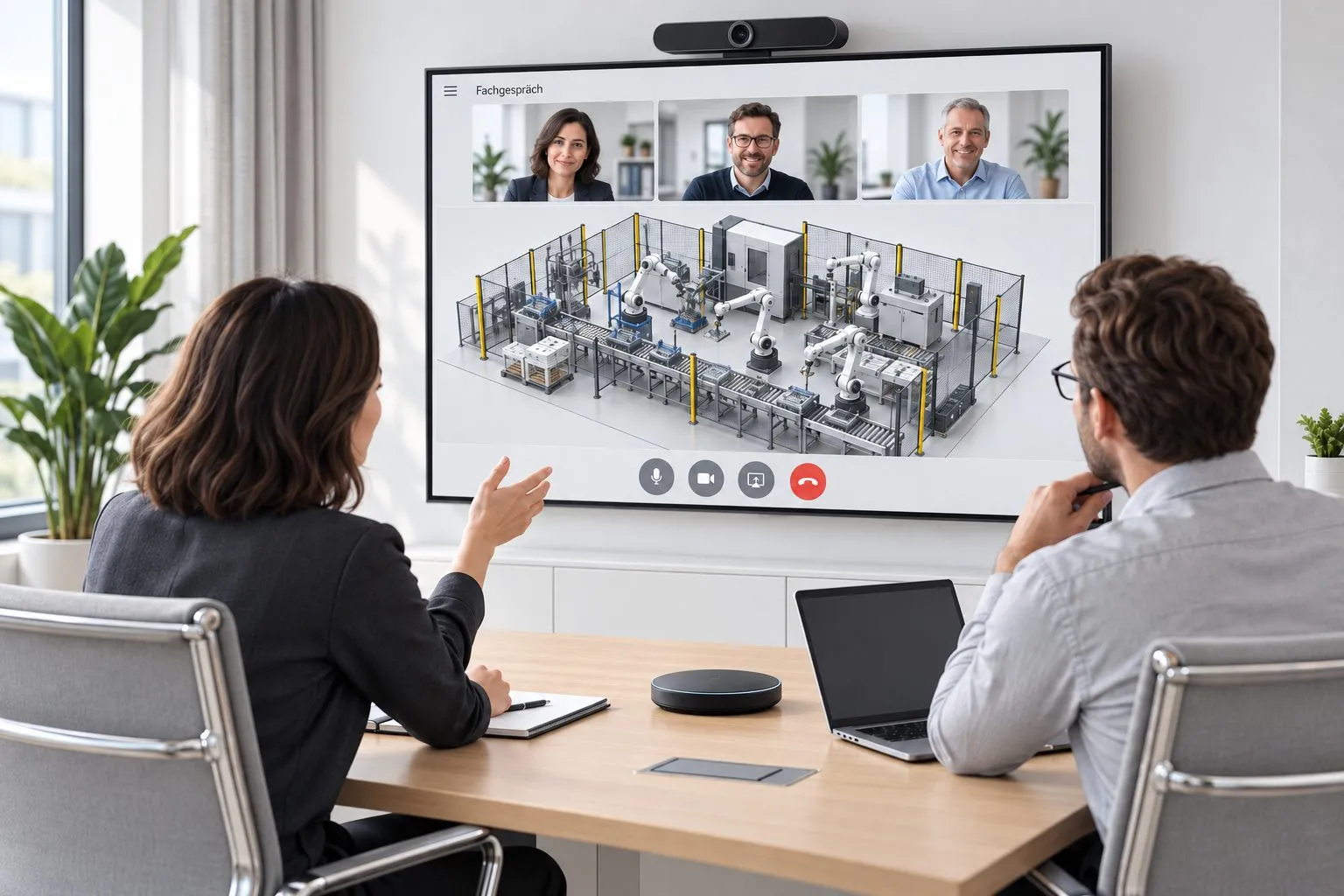
Ai2
We discuss your requirements
 Ai
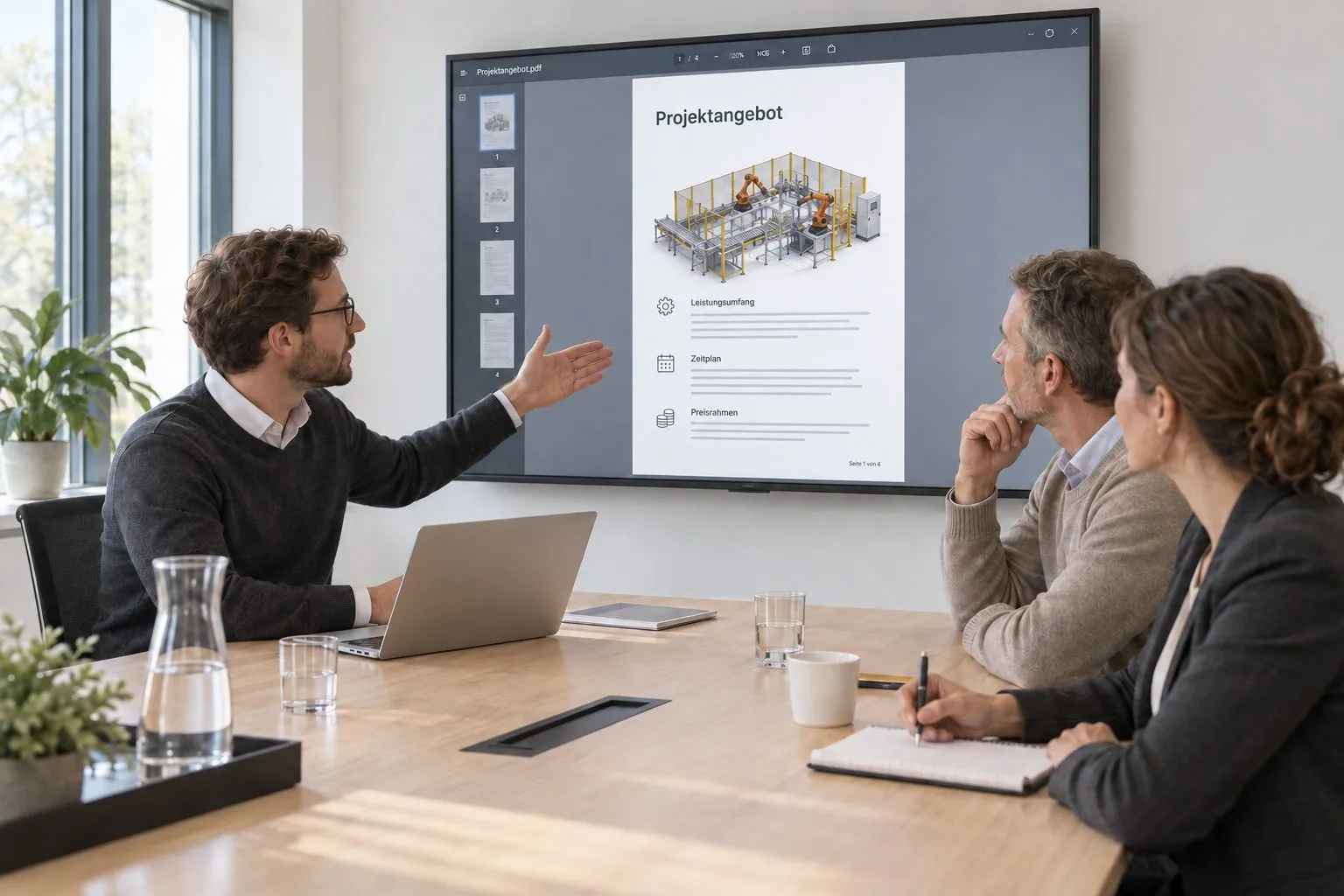
Ai3
You receive a quotation for the agreed scope

Describe your task in the contact form. We come back with a proposed date.
Arrange a first conversationBooking calendar
The booking calendar appears here. It loads only after your consent, because your browser connects to Microsoft in the process.
Discover further suitable services.
Test PLC and robot programs on the digital plant model before real commissioning begins.
Make trends, relationships and deviations in production data visible.
Coordinate requirements, expert teams and shared program foundations across project boundaries.
