


Software and control
Programs are loaded onto the control systems; plant and software are adjusted.
Suggestions appear from three characters.
No match. Try another term or choose a topic below.
Validate the controller against a model
The topic area at a glance
Customers we work for
Joint projects and their results
Working at IQstruct Engineering
ISO 9001 and TISAX
Alliances, associations, marketplaces
Quality policy and certificate
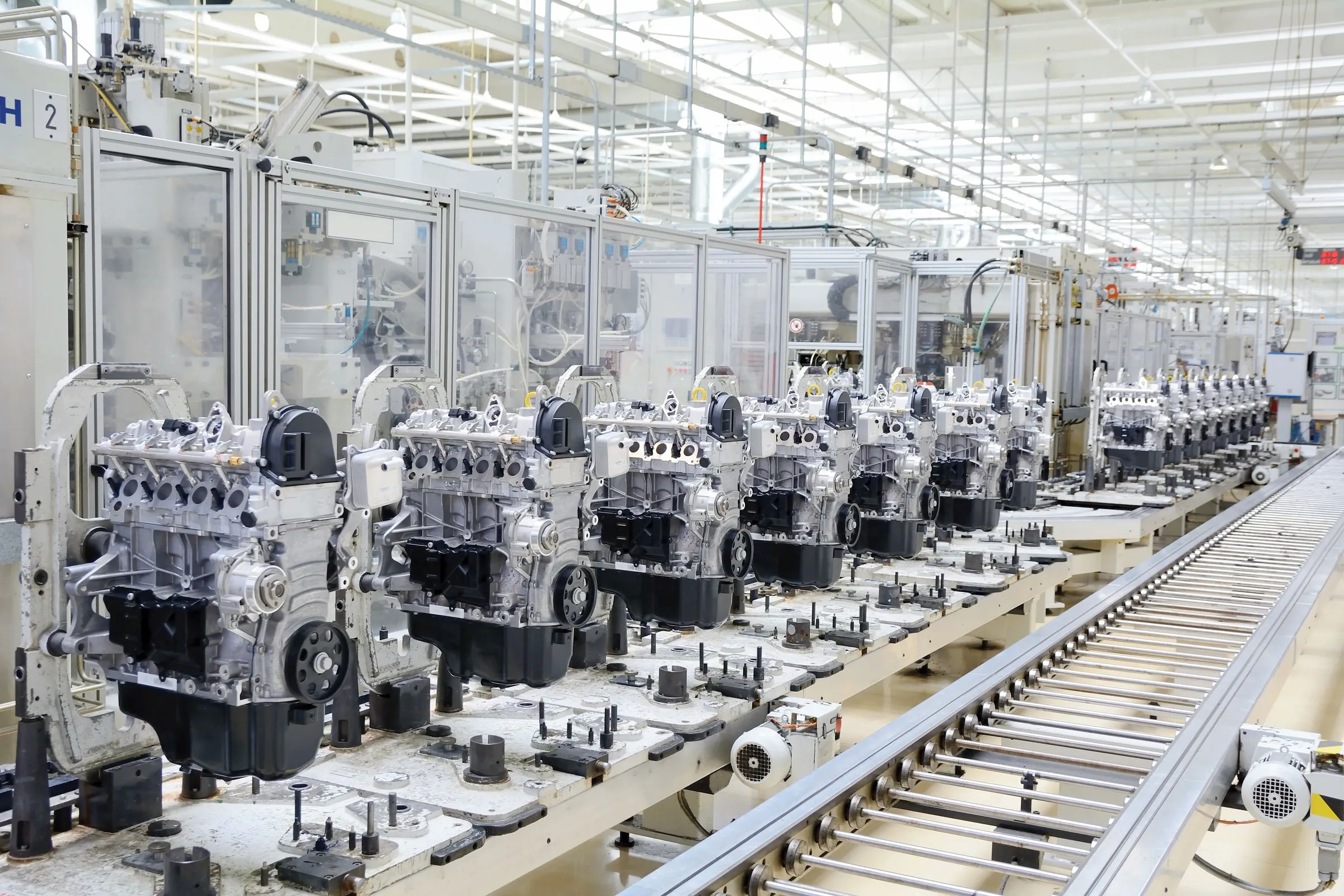
We bring software, peripherals and real sequences together, from the I/O check to the ramp-up.
On the assembled plant, programs meet real sensors, drives and mechanics. Wrong assignments, missing releases or unchecked device parameters can delay the first production runs.
IQstruct Engineering loads the software, supports the I/O check, tests manual functions and accompanies the first parts. Barcode and RFID readers, camera systems and drives are set up. Data connections to customer systems, agreed safety tests and FAT and SAT support are integrated into the sequence.
In a free first conversation we clarify scope, time window and location, and say which people we put on it.
Programs are loaded onto the control systems; plant and software are adjusted.
Barcode and RFID readers, camera systems, drives and further devices are parameterised and integrated.
The agreed connections to customer systems, for example via OPC UA or to the MES, are set up and tested.
Agreed safety tests, quality runs as well as FAT and SAT are integrated into the sequence.
At IQstruct Engineering, virtual and real commissioning form one continuous process.
While the real plant is being assembled, virtual commissioning tests the control software and connected systems on the model. After the I/O check, the version accepted in the virtual FAT is transferred to the real controller. On site, the real installation, mechanics and processes are then tested.
Controllers and plants are then integrated into the customer's IT and production systems. For this we set up connections, for example via OPC UA, check data points and messages and coordinate the interface with the customer's IT.
Changes from real commissioning are fed back into the software, the documentation and the simulation model. The model thus remains usable for training and later conversions.
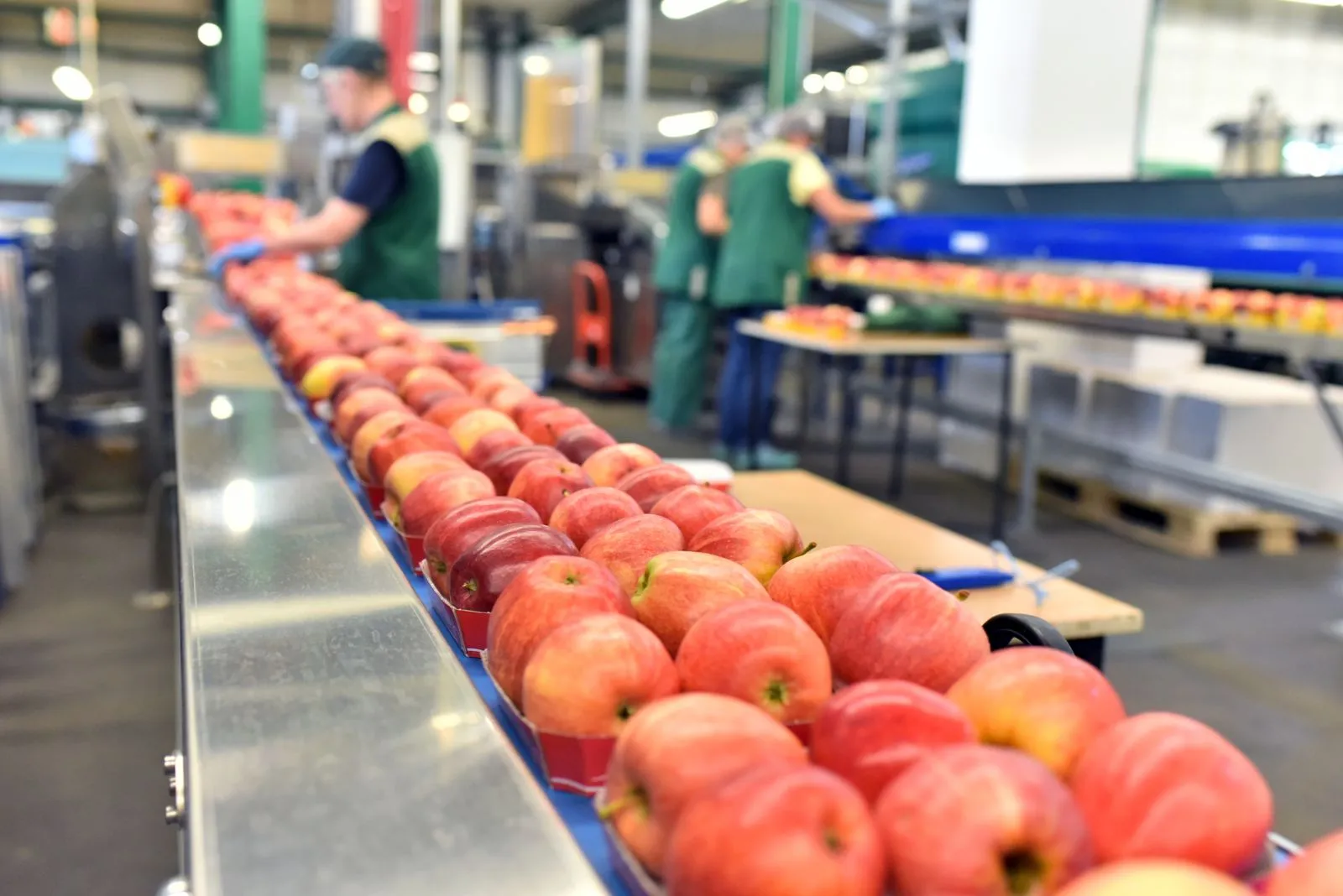
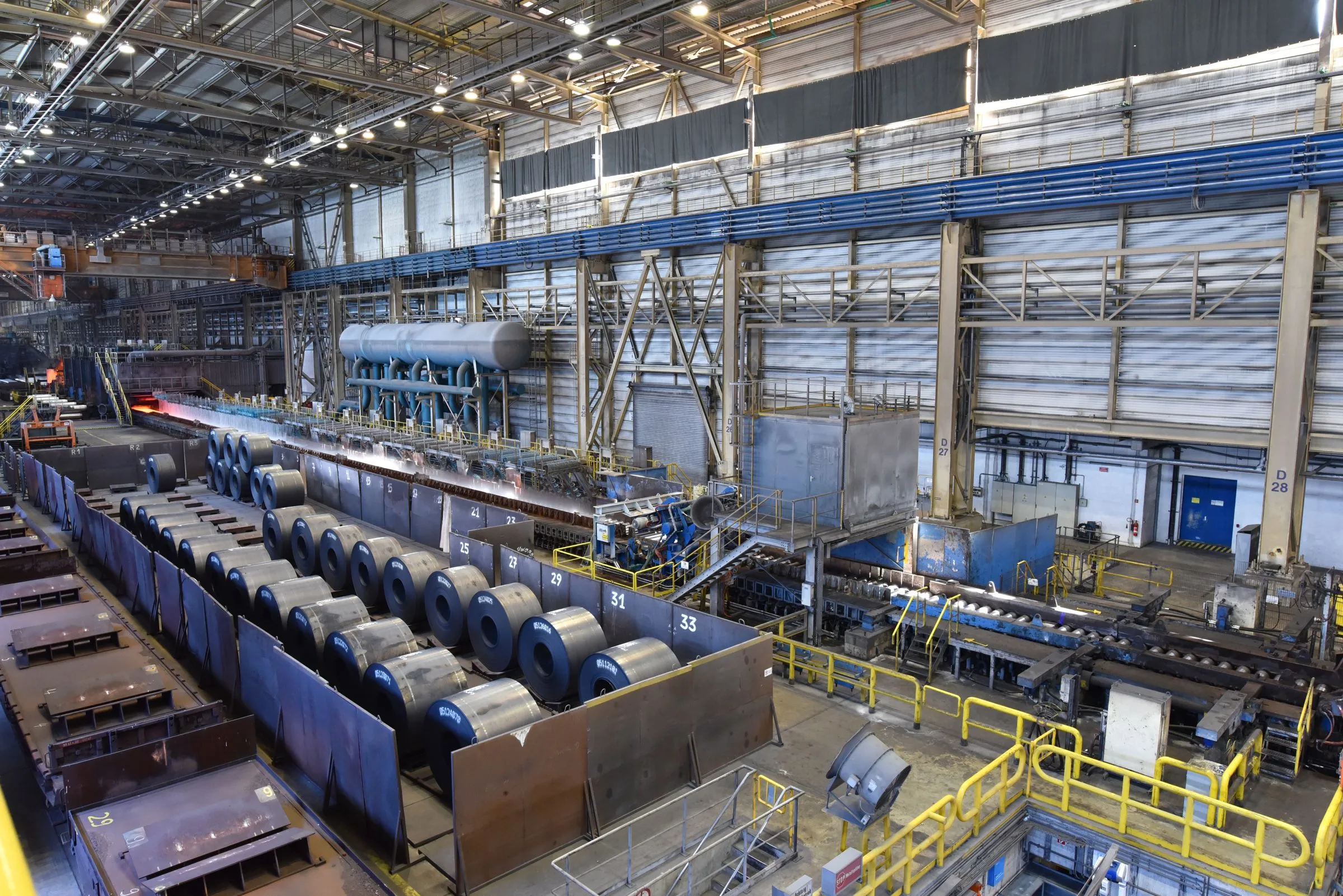
On site
The I/O check, peripherals, data connections and the first parts lead the plant step by step into the ramp-up.
 Ai
Ai1
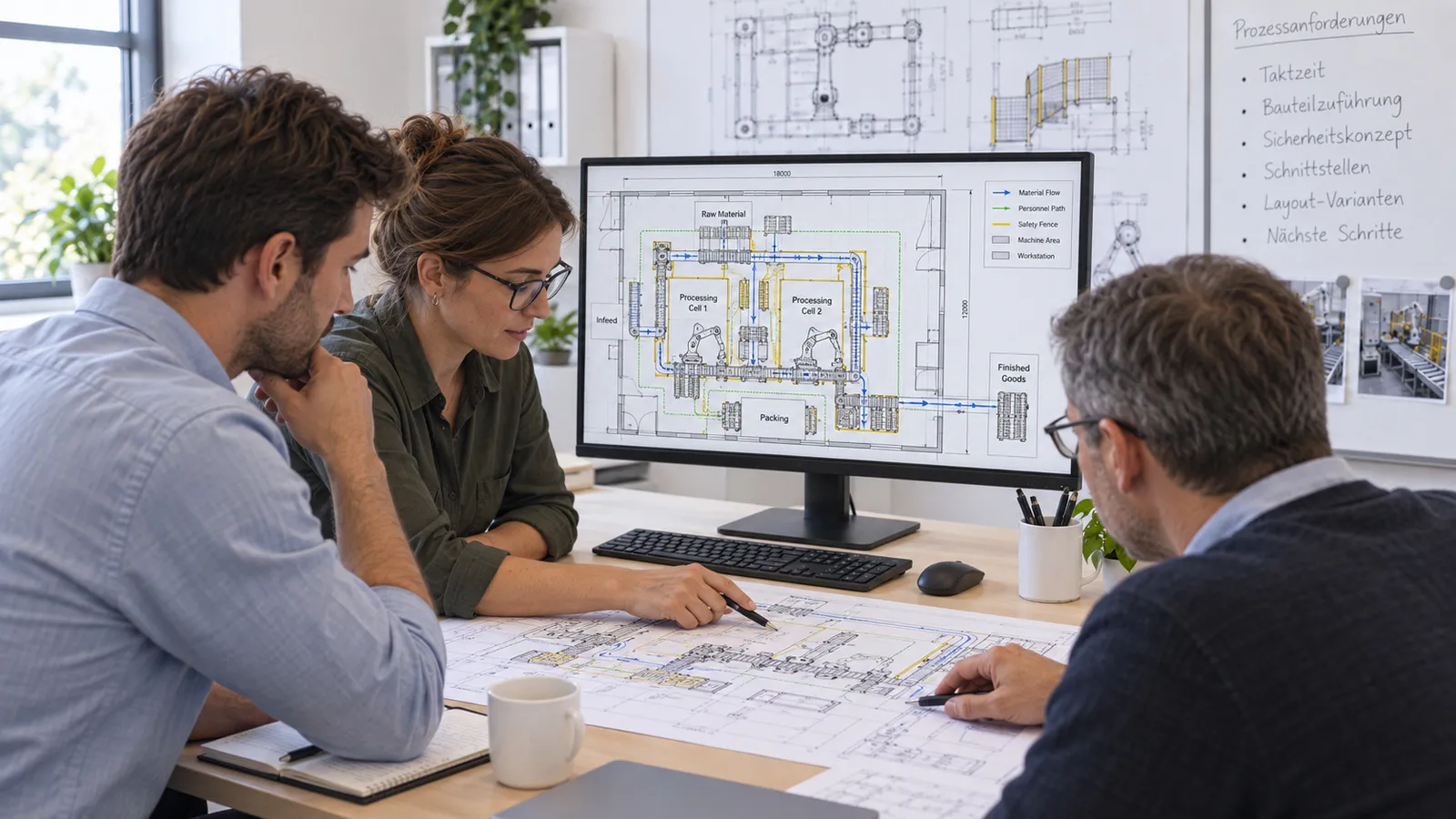
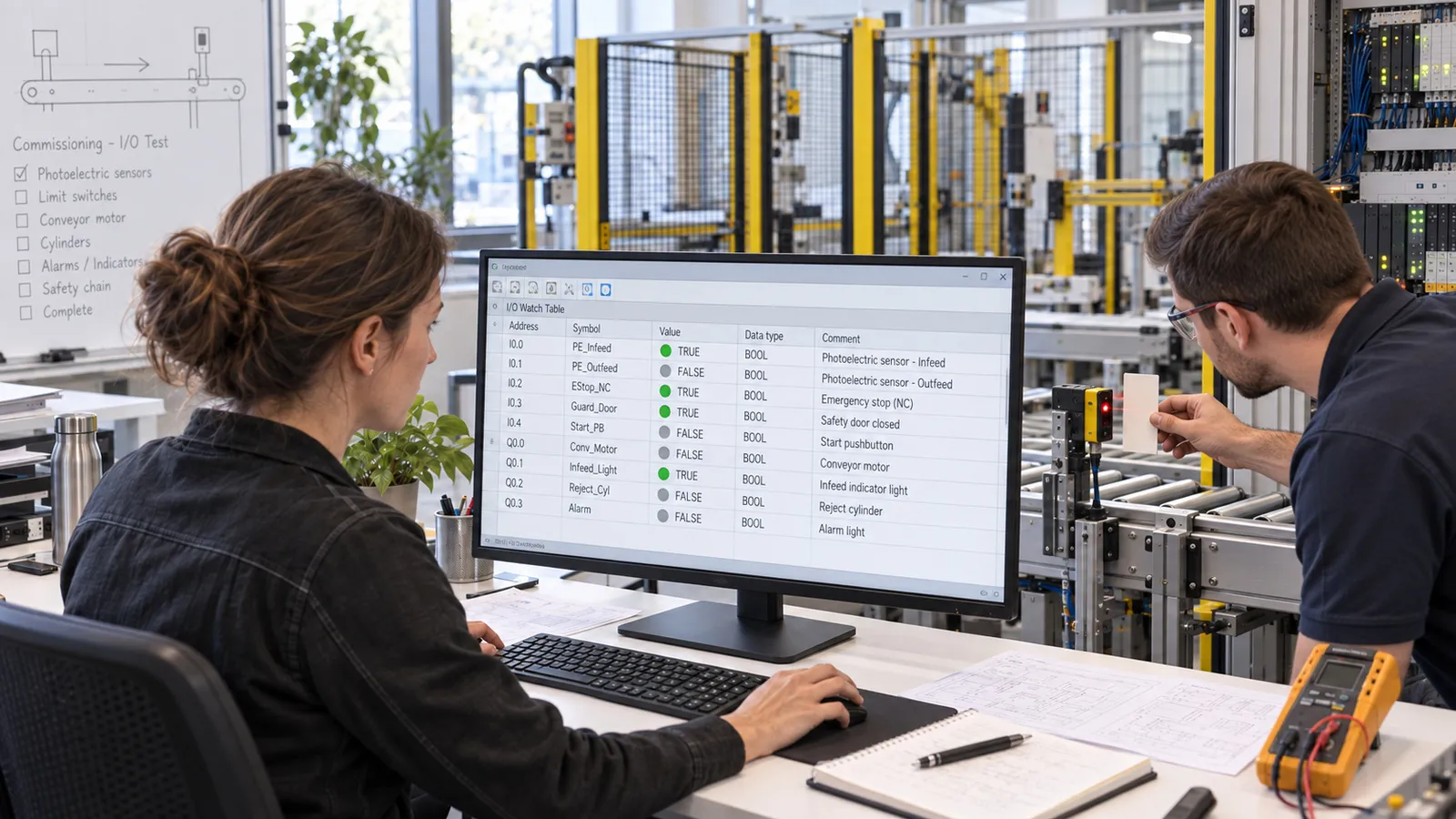
Discuss process requirements
Process description, plant layout and interfaces are clarified with your team.
 Ai
Ai2
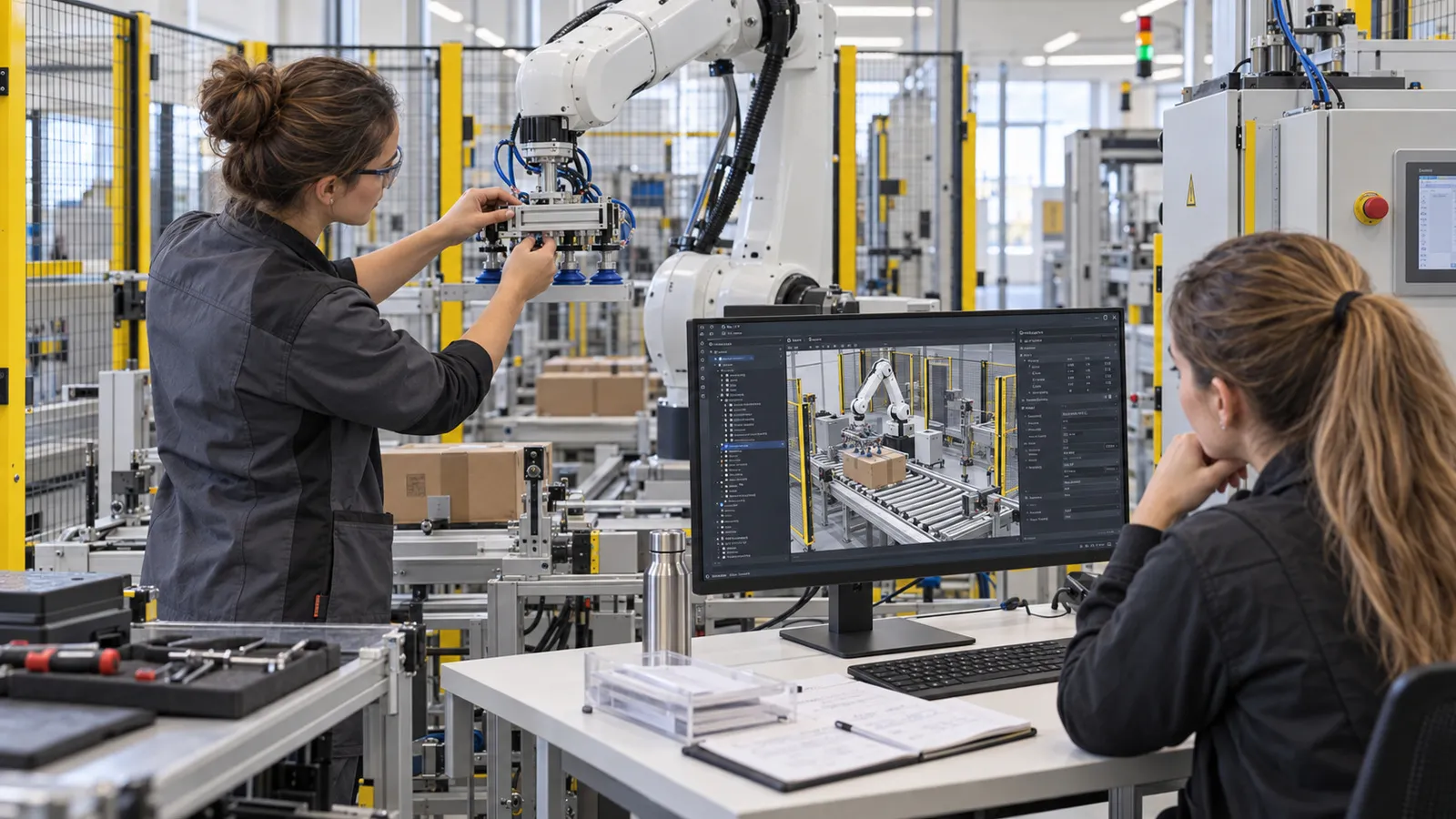
Check the signals
In the I/O check, sensors, actuators and bus communication are checked against the control assignment.
 Ai
Ai3
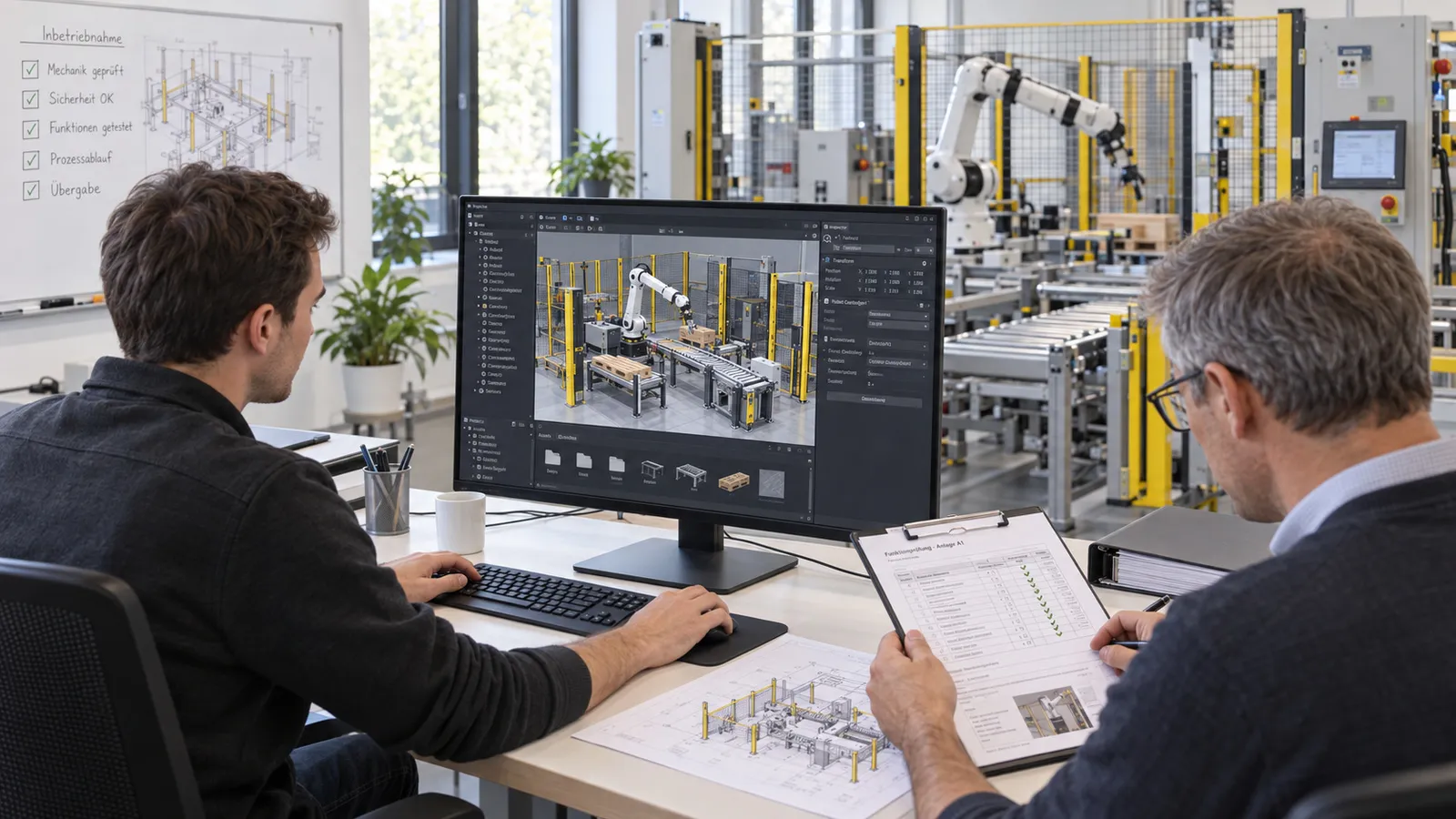
Commission the real plant
The tested software version goes to the real plant and is fine-tuned there.
 Ai
Ai4
Ramp-up and handover
Function tests and quality runs are documented, and the plant then goes to your team.
Project experience
IQstruct Engineering has worked with suppliers of an automotive OEM on the virtual commissioning and ramp-up of battery production lines.
The work covers sites in Europe and worldwide. IQstruct Engineering already worked on the virtual commissioning for the production of the predecessor series in Germany.
We are glad to answer your detailed questions in a personal conversation.
Responsibility for the overall plant and formal acceptance is defined in the contract. We do not promise a date or a fault-free ramp-up across the board.
Yes. The first parts and test parts run through the plant, and we accompany machine capability studies and further quality runs.
We prepare tests, carry them out, document the results and work through open points. The legally binding acceptance is declared by the authorised contracting parties.
Support covers fault analysis, software corrections and optimisations, via remote access or on site. Response times and duration are agreed in the contract.
Every industry has its particularities. That calls for a reliable partner who knows the requirements and delivers suitable solutions.
First conversation
Describe your task. We agree a date and discuss the possible project scope.
 Ai
Ai1
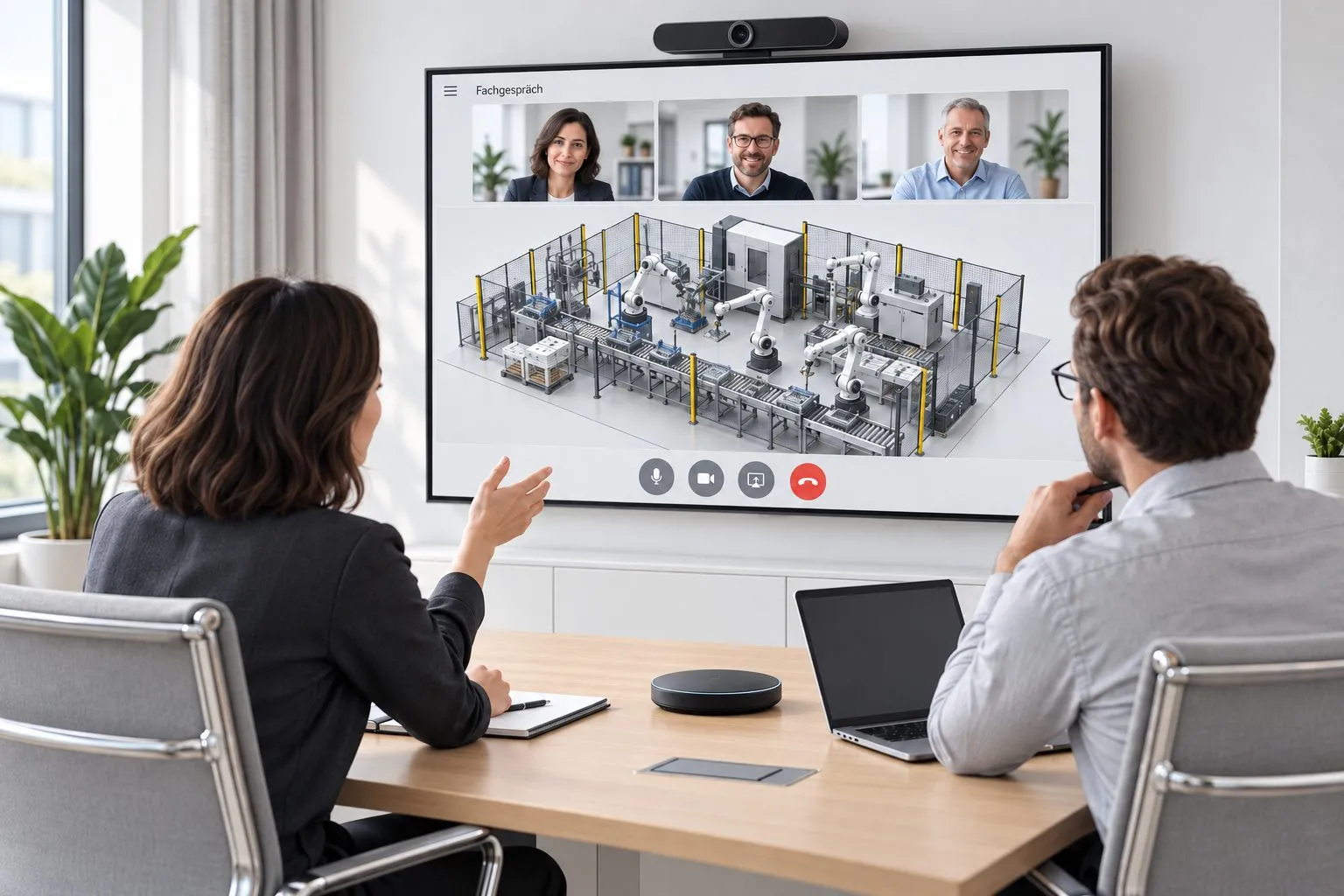
You request an appointment
 Ai
Ai2
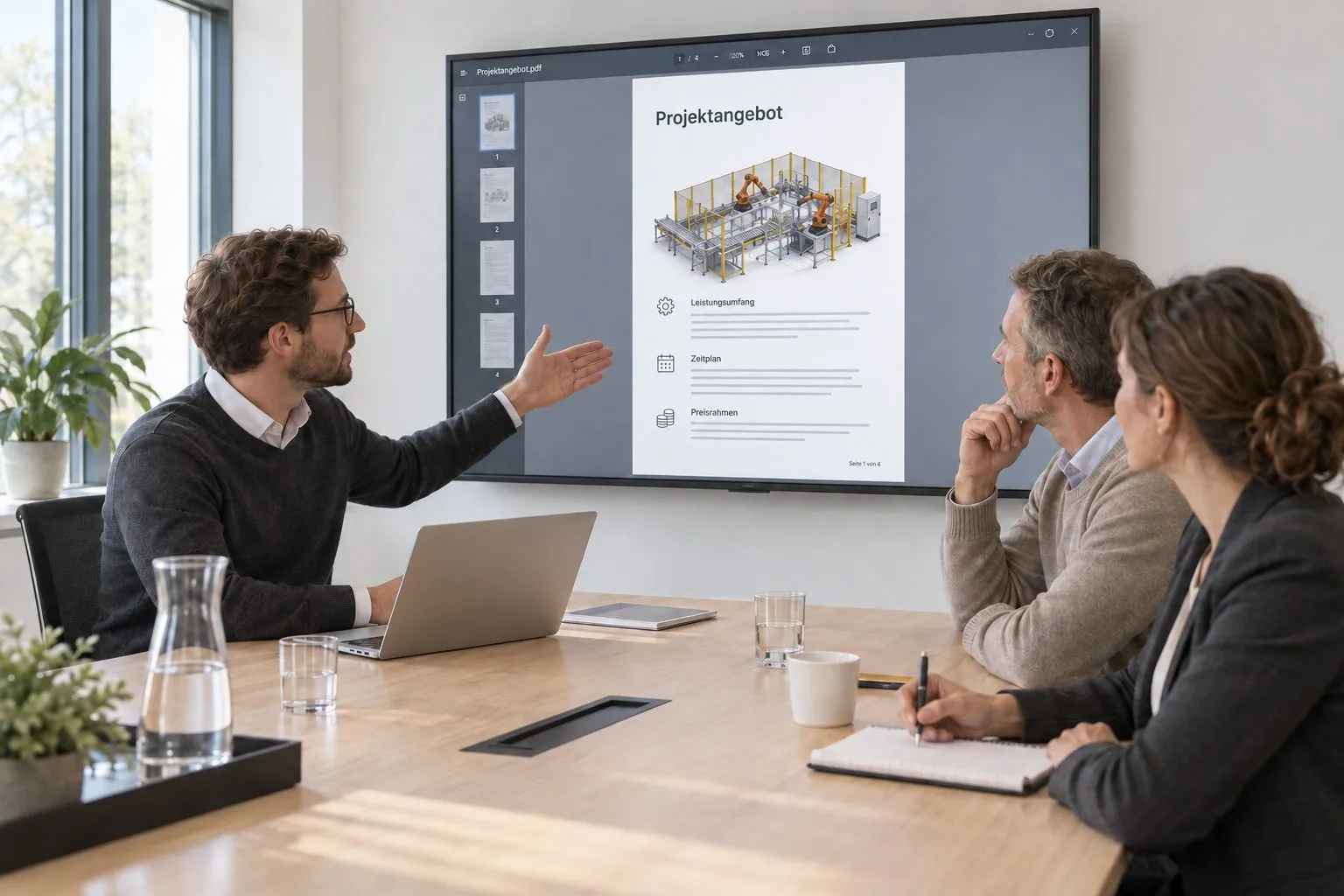
We discuss your requirements
 Ai
Ai3
You receive a quotation for the agreed scope

Describe your task in the contact form. We come back with a proposed date.
Arrange a first conversationBooking calendar
The booking calendar appears here. It loads only after your consent, because your browser connects to Microsoft in the process.
Discover further suitable services.
Test PLC and robot programs on the digital plant model before real commissioning begins.
Implement specified protective functions in control software and test their response on the plant.
Use the virtual commissioning model for operation, troubleshooting and restart.
