


Handling
Parts and materials are moved between stations, conveyors and fixtures.
Suggestions appear from three characters.
No match. Try another term or choose a topic below.
Validate the controller against a model
The topic area at a glance
Customers we work for
Joint projects and their results
Working at IQstruct Engineering
ISO 9001 and TISAX
Alliances, associations, marketplaces
Quality policy and certificate
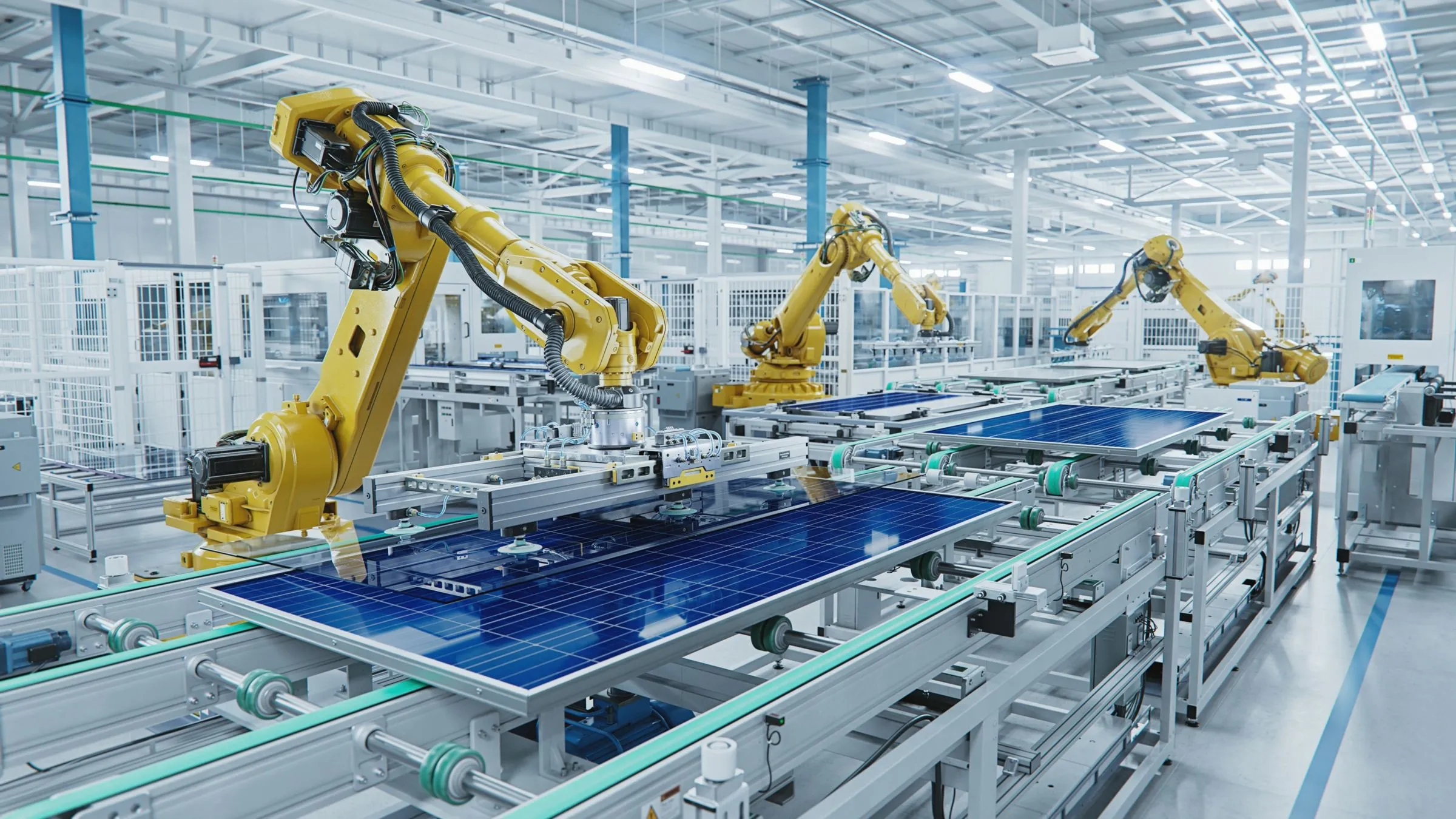
Prepare movements and interfaces offline and fine-tune them on the real cell.
A working robot program alone is not enough for a stable cell sequence. Handovers, releases and process steps have to fit together with the PLC, peripherals and operation.
IQstruct Engineering programs robots for handling, palletising, assembly and screwdriving. Offline programming, simulation, interface coordination and commissioning are part of the offer. We work with ABB, KUKA and FANUC as well as Universal Robots for cobot applications; welding and bonding extend the possible range of processes.
In a free first conversation we clarify which robot brand is in use, how the cell is connected to the controller and what can be checked against a model beforehand.
Welding and bonding extend the possible range of processes.
Parts and materials are moved between stations, conveyors and fixtures.
Layer patterns, gripper changes and handovers are coordinated with the plant.
Joining operations are connected with the process steps and peripherals of the cell.
Screwdriving processes are integrated into the cell sequence with releases and feedback.
We work with ABB, KUKA and FANUC as well as Universal Robots for collaborative applications.
For offline programming we use ABB RobotStudio, FANUC ROBOGUIDE as well as KUKA.Sim, KUKA.WorkVisual and KUKA iiQWorks. Which environment fits depends on the robot generation, the controller and the task.
In the model, robots, grippers, workpieces and surroundings are positioned, tool and user coordinate systems defined and paths planned. Reach, movement envelopes and possible collisions are checked at the level of detail of the model before the real cell is available.
Virtual commissioning can then test robot and PLC programs together against the plant model. On the real cell, calibration, final path adjustments and tests with the real mechanics follow.
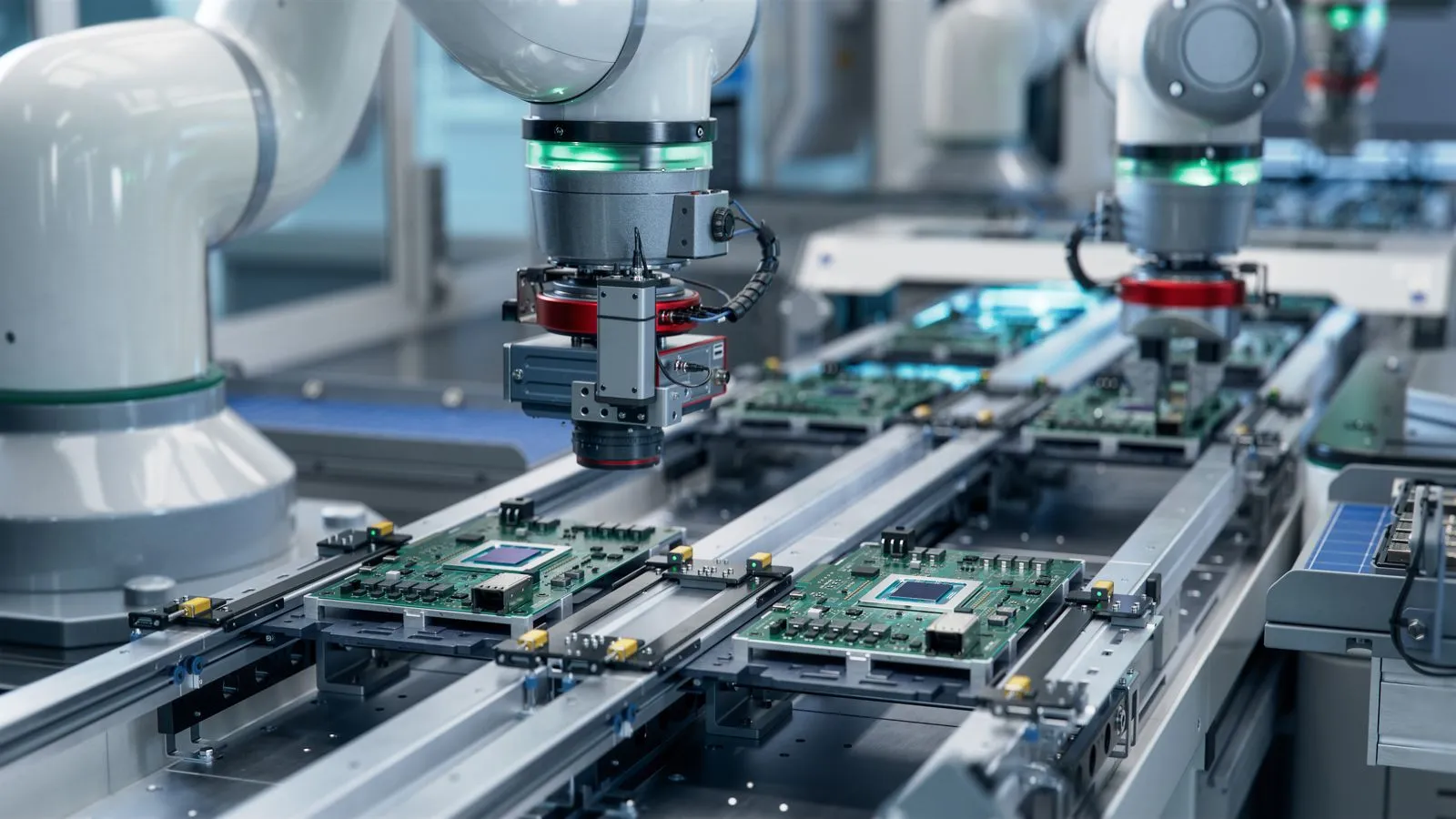
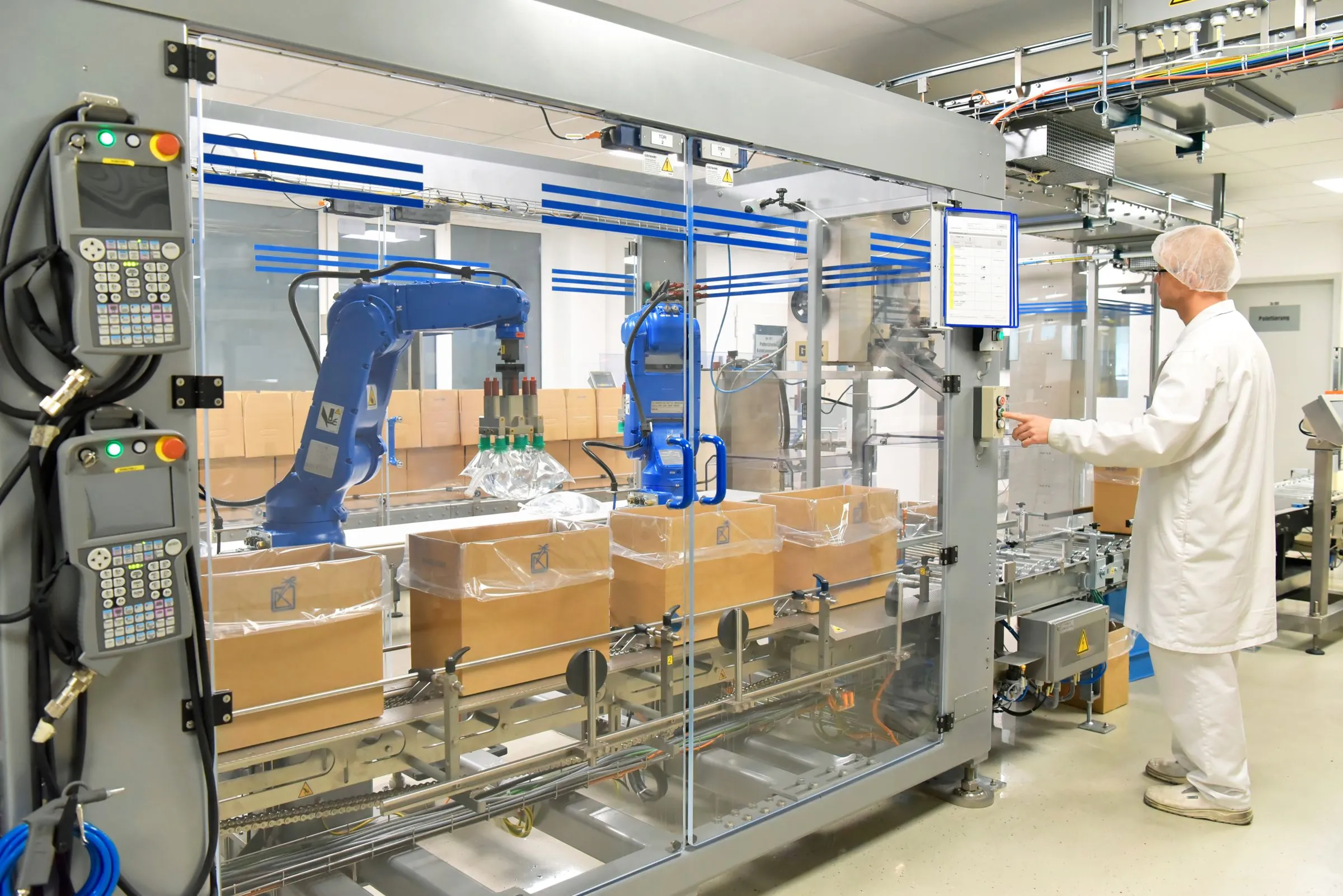
In the cell
Programs prepared offline are calibrated on the real cell and coordinated with handovers and releases.
 Ai
Ai1
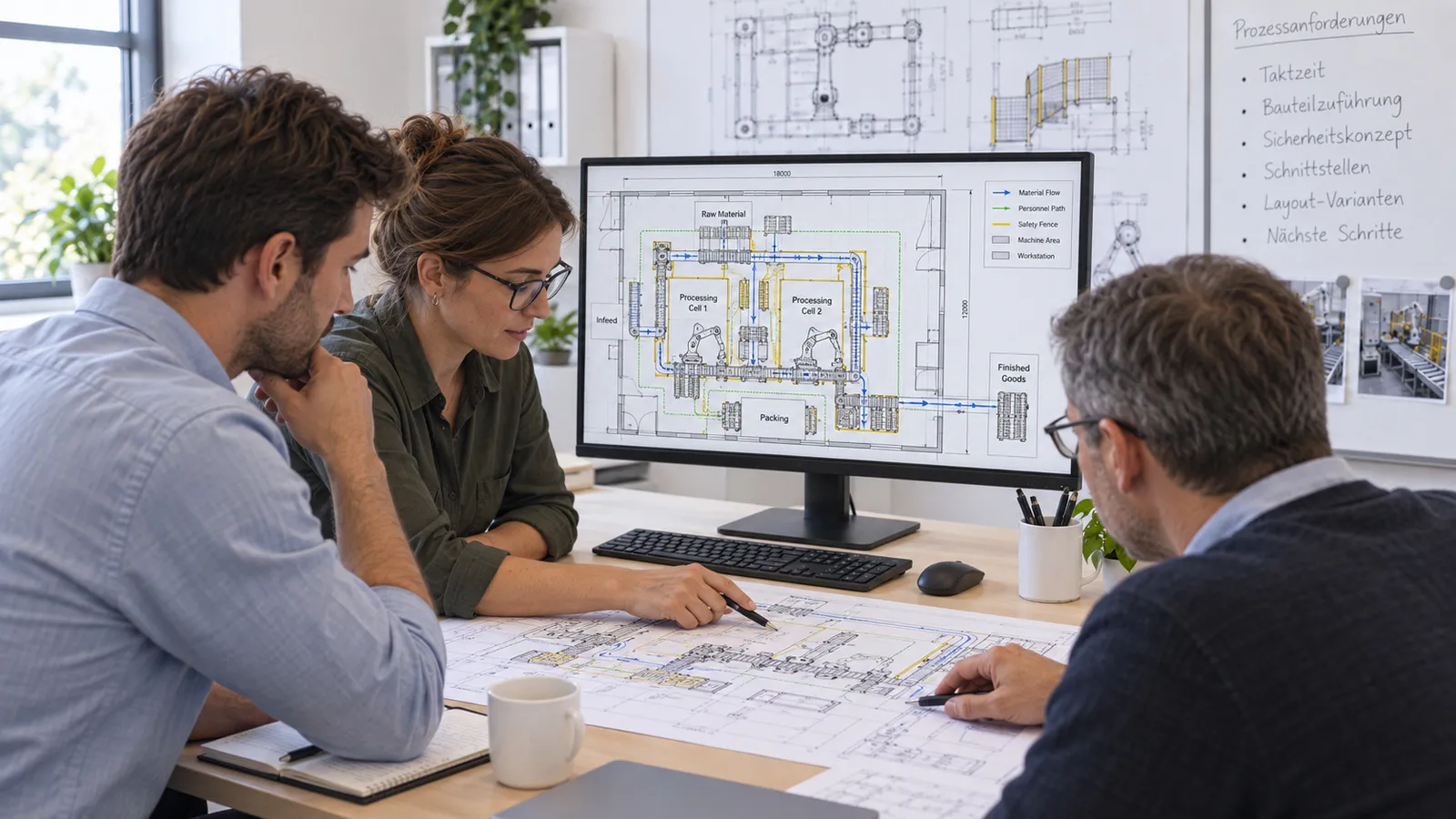
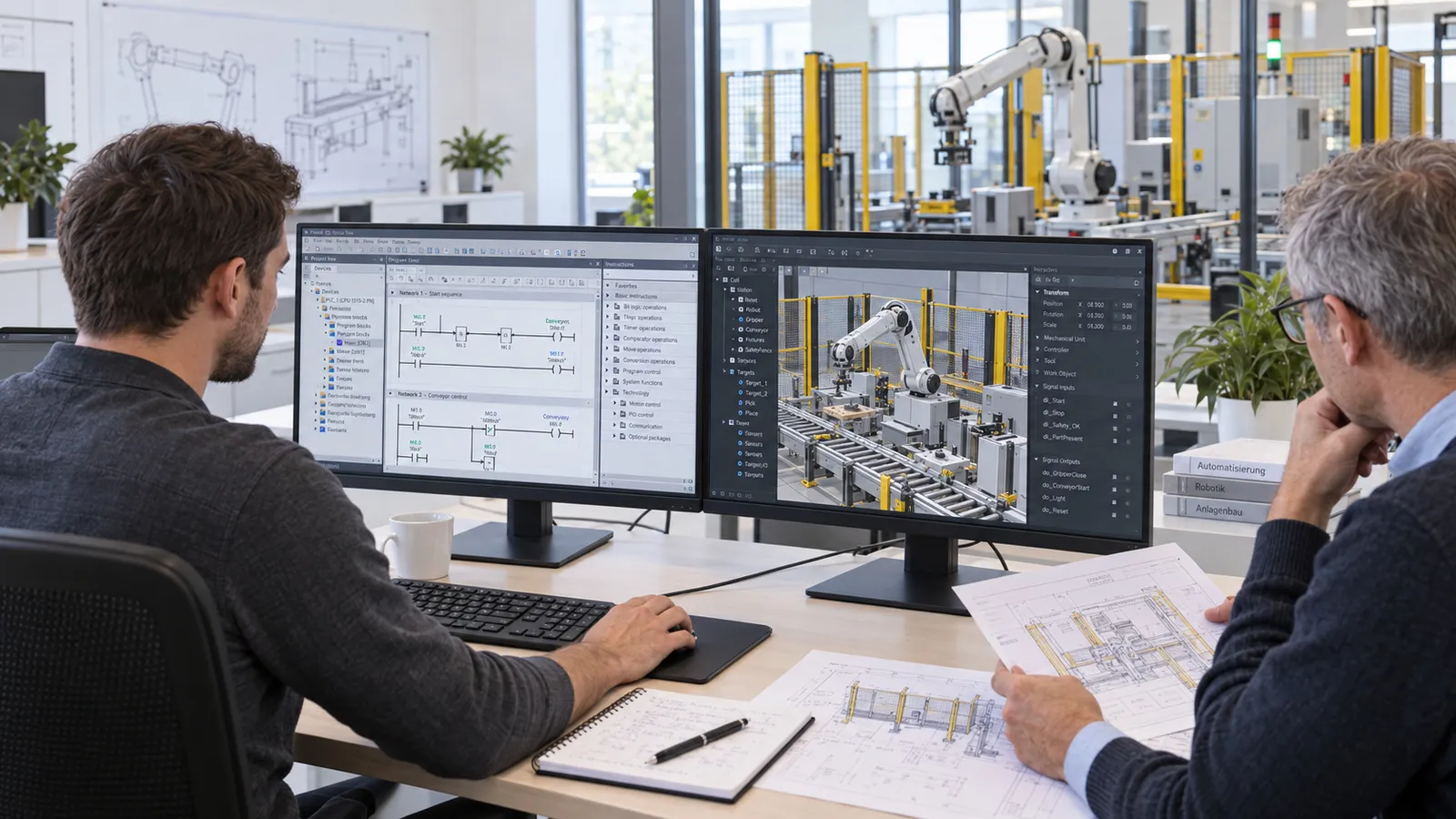
Discuss process requirements
Process description, plant layout and interfaces are clarified with your team.
 Ai
Ai2
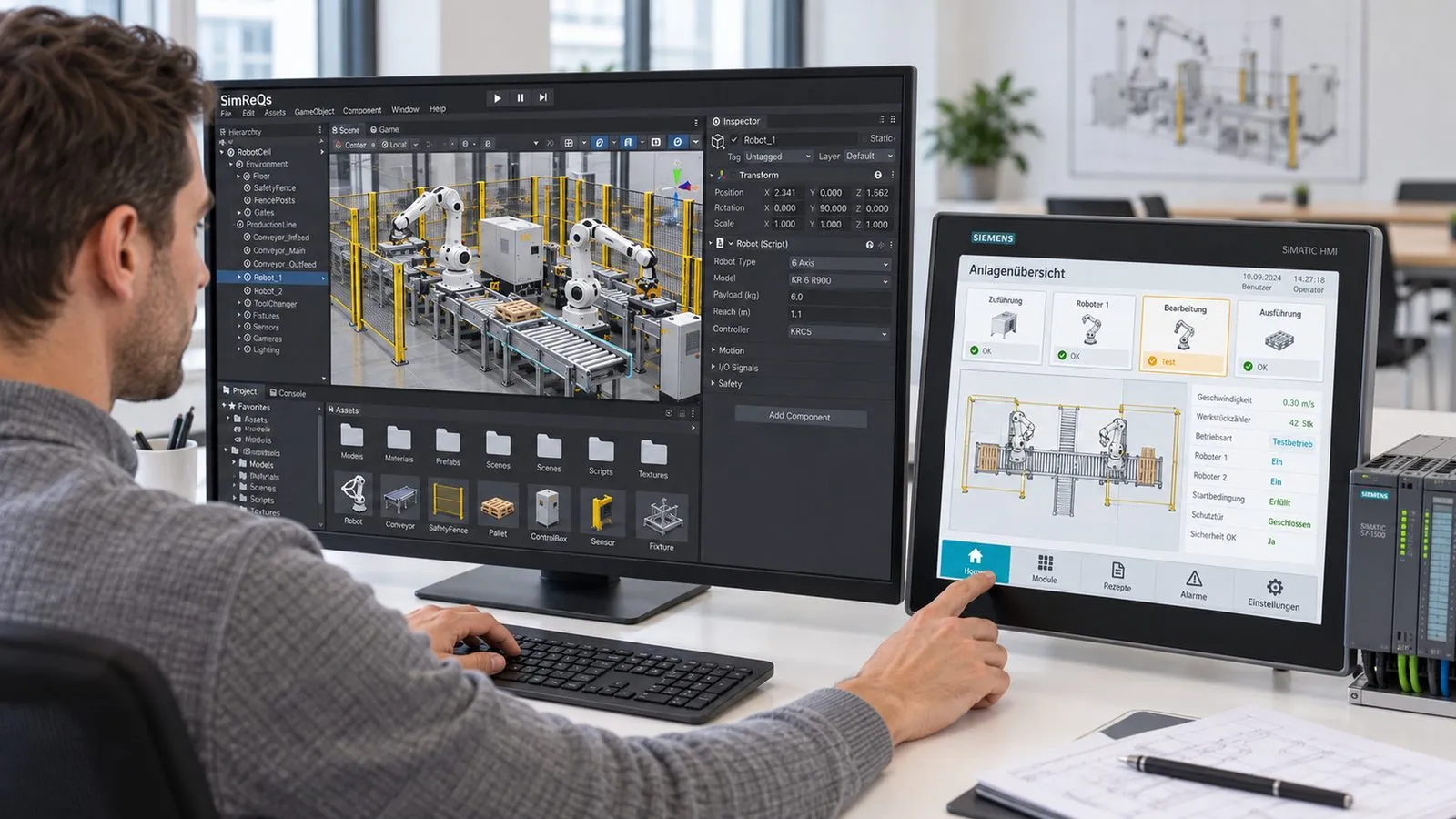
Program the controllers
PLC and robot programs are developed as one coordinated automation concept.
 Ai
Ai3
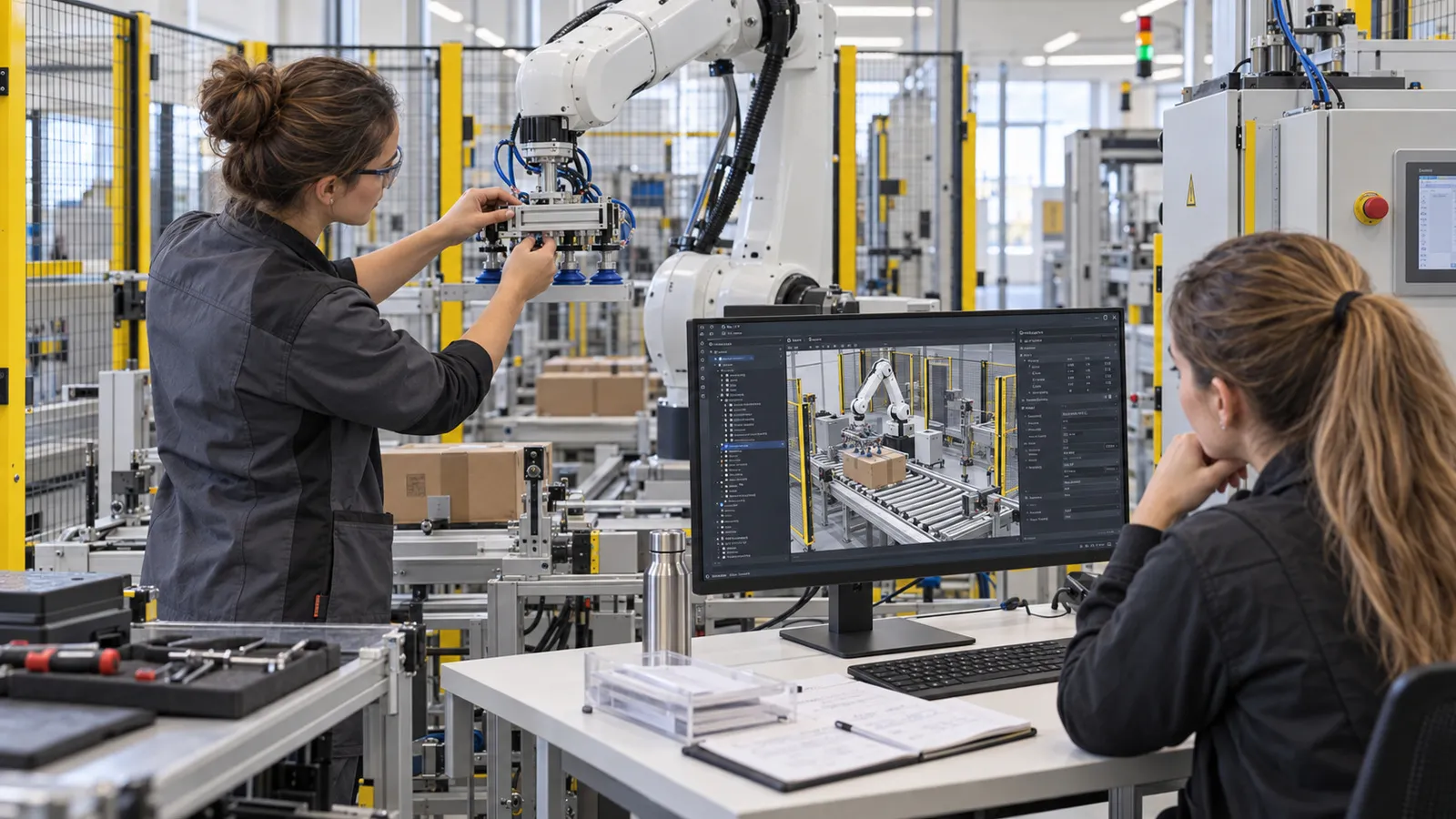
Virtual commissioning
The real programs control the model through a bidirectional coupling; the phase ends with an accepted software version.
 Ai
Ai4
Commission the real plant
The tested software version goes to the real plant and is fine-tuned there.
Which functions sit in the PLC and which in the robot controller depends on the plant architecture and the customer specification.
Start, stop and release signals determine when the robot may work.
The PLC selects the right program for the part and the variant.
Gripper commands, positions and feedback keep robot and plant in the same state.
Fault information reaches the operators before the sequence falters.
Handover
The agreed program version, the associated simulation environment and technical documents allow the solution to be developed further.
Interfaces, special features and tests are documented with test and inspection reports. This shows which version was handed over, even when changes are made later.
We are glad to answer your detailed questions in a personal conversation.
A cobot does not replace a safety concept. Specific protective functions and responsibility for acceptance are defined for the application.
Mechanical tolerances, real gripper behaviour and process forces are assessed on the real cell. Offline programming shortens this work, but it remains part of the project.
We state a cycle time result as soon as the process, the safety requirements, the mechanics and the real boundary conditions are known.
We take agreed safety zones into account and implement them. The dividing line with functional safety is defined in the project.
Every industry has its particularities. That calls for a reliable partner who knows the requirements and delivers suitable solutions.
First conversation
Describe your task. We agree a date and discuss the possible project scope.
 Ai
Ai1
You request an appointment
 Ai
Ai2
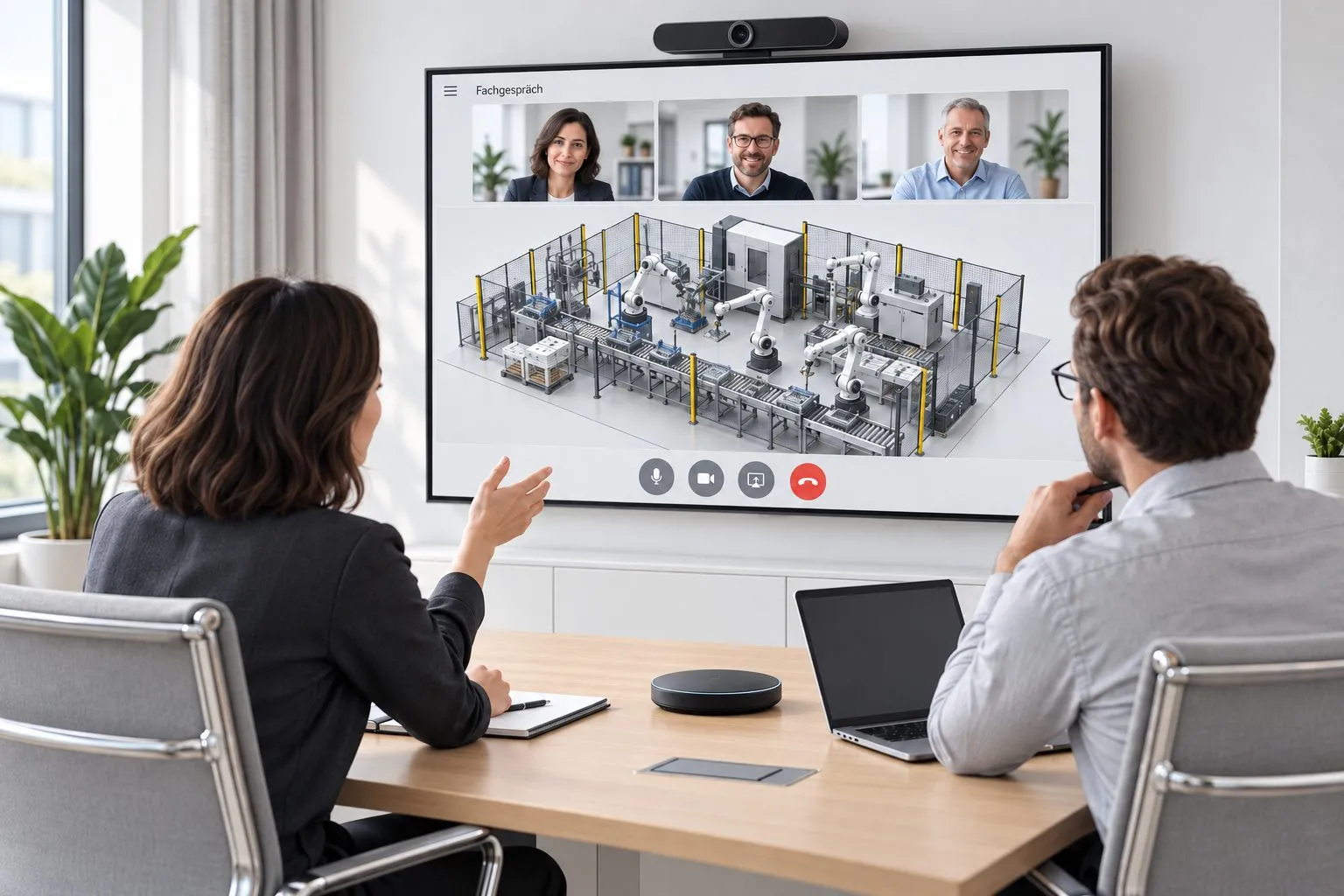
We discuss your requirements
 Ai
Ai3
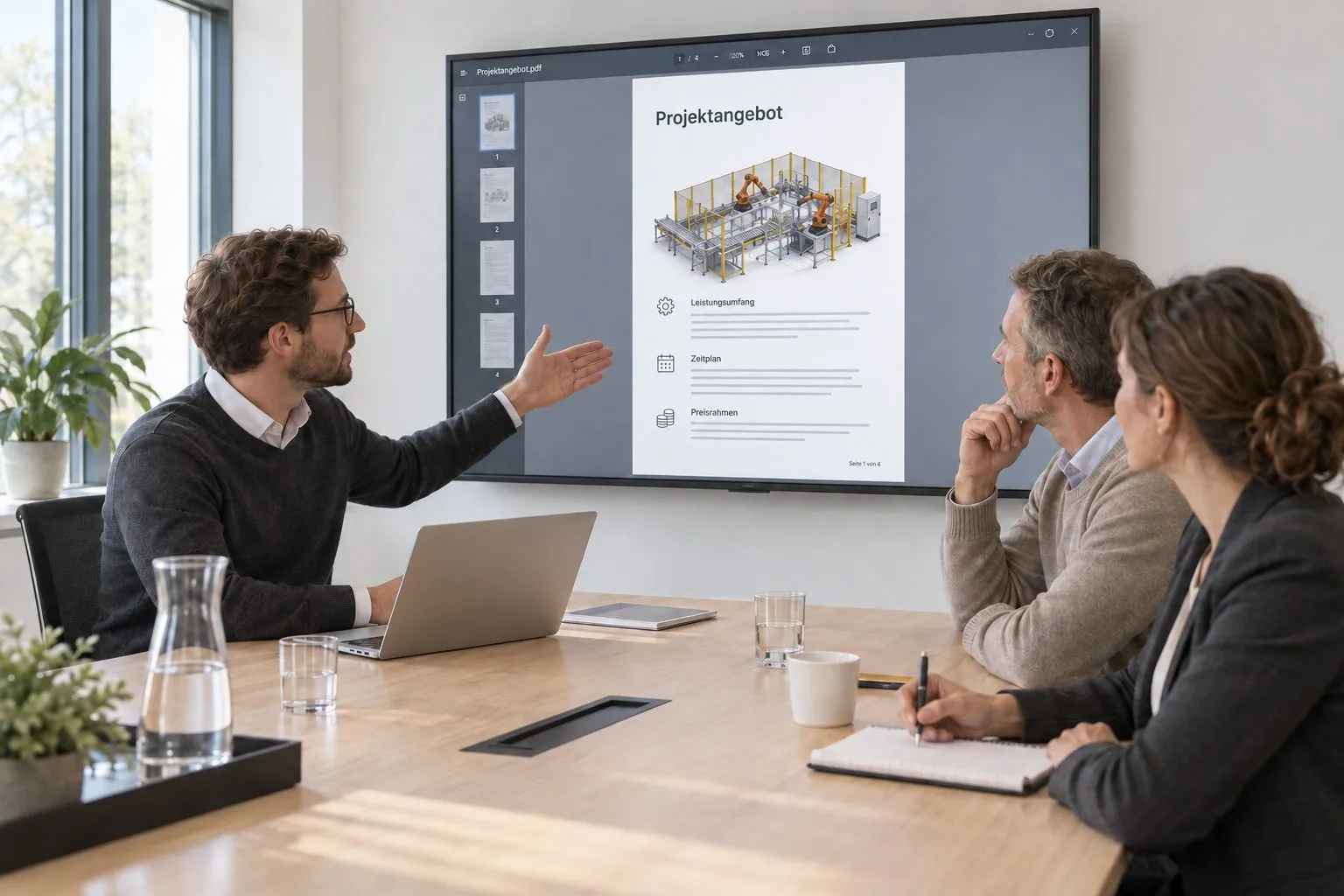
You receive a quotation for the agreed scope

Describe your task in the contact form. We come back with a proposed date.
Arrange a first conversationBooking calendar
The booking calendar appears here. It loads only after your consent, because your browser connects to Microsoft in the process.
Discover further suitable services.
Connect sequence control, operation and diagnostics in one coordinated automation concept.
Implement specified protective functions in control software and test their response on the plant.
Test PLC and robot programs on the digital plant model before real commissioning begins.
